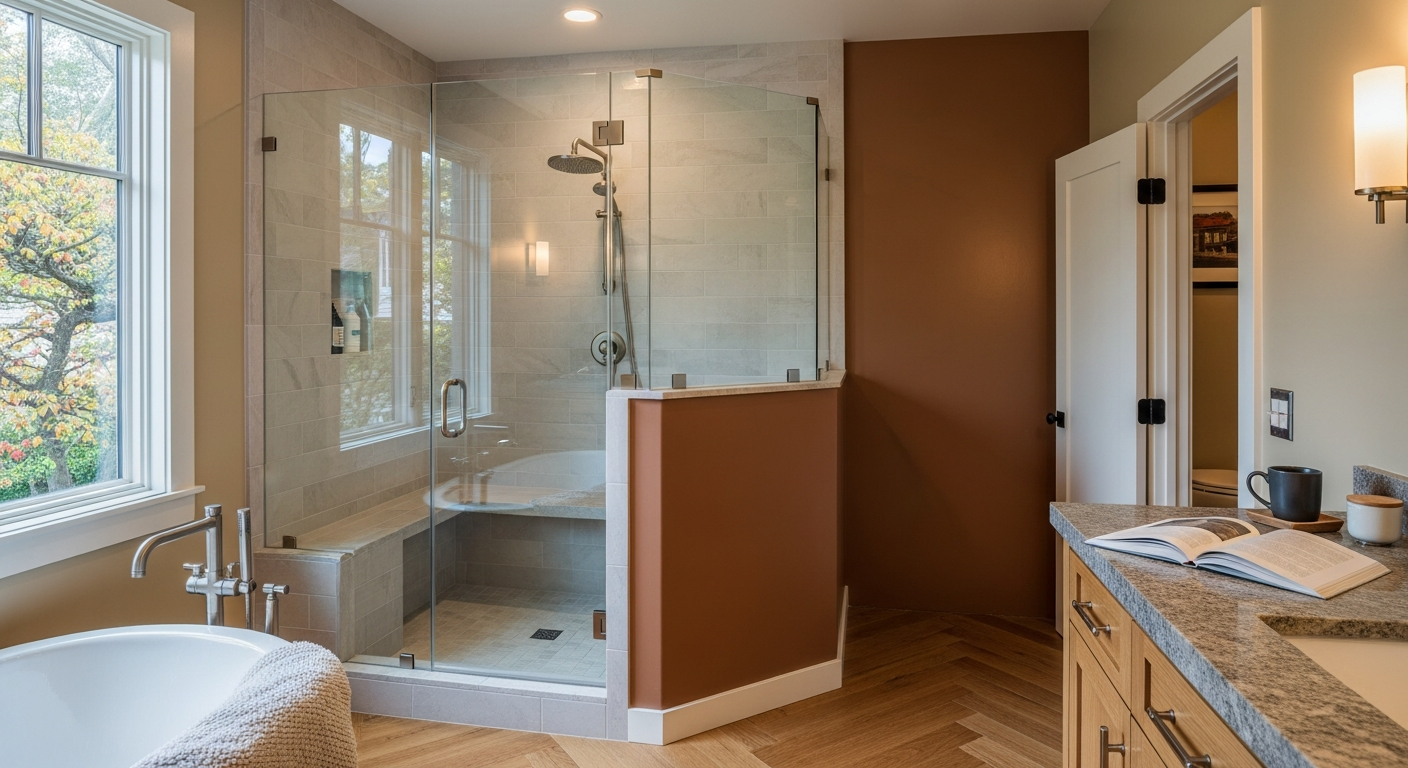
How Much Does Steam Shower Installation Cost in the Bay Area in 2026?
Steam shower installation in the Bay Area costs between $8,000 and $30,000+ in 2026, depending on the size of the enclosure, the steam generator brand, tile selection, and the complexity of the plumbing and electrical work involved. Based on our 116+ completed Bay Area projects at Barcci Builders, the average homeowner investing in a dedicated steam shower spends roughly $15,000–$22,000 for a mid-range to high-end installation that includes the generator, a fully waterproofed enclosure, premium tile, a frameless glass door, and all necessary plumbing and electrical connections.
That range can feel broad, so let me break it down. The steam generator itself — the heart of the system — runs $2,000–$6,500 for residential models from brands like Mr. Steam, Kohler, Steamist, and ThermaSol. The enclosure build-out — framing, waterproofing membrane (Schluter Kerdi or Laticrete Hydro Ban), cement board, tile, a sloped ceiling, and a sealed frameless glass enclosure — typically represents 50–60% of the total project cost. Then you add electrical work for the dedicated 240V circuit, a new water supply line, and a steam head, plus finish details like a digital control panel, aromatherapy port, or chromotherapy lighting.
Here's a cost breakdown table we share with homeowners in Los Gatos, Saratoga, and across Silicon Valley:
| Component | Budget Range | Mid-Range | High-End / Luxury |
|---|---|---|---|
| Steam Generator (installed) | $2,000–$3,000 | $3,500–$5,000 | $5,000–$6,500 |
| Enclosure Build-Out (waterproofing, cement board, framing) | $2,500–$4,000 | $4,000–$7,000 | $7,000–$12,000 |
| Tile (material + labor) | $1,500–$3,000 | $3,000–$6,000 | $6,000–$12,000+ |
| Frameless Glass Enclosure | $1,200–$2,000 | $2,000–$3,500 | $3,500–$5,500 |
| Electrical (dedicated 240V circuit) | $800–$1,200 | $1,200–$1,800 | $1,800–$2,500 |
| Plumbing (water line, drain, steam head) | $600–$1,000 | $1,000–$1,800 | $1,800–$3,000 |
| Digital Controls, Aromatherapy, Chromotherapy | $300–$600 | $600–$1,500 | $1,500–$3,500 |
| Permit & Inspection (Santa Clara / San Mateo County) | $300–$600 | $300–$600 | $300–$600 |
| Total Estimated Cost | $8,000–$14,000 | $15,000–$22,000 | $22,000–$35,000+ |
As someone who's completed over 116 remodels across the Bay Area, I can tell you that the single biggest factor driving steam shower cost isn't the generator — it's the enclosure. A custom tile enclosure with zellige tile, Calacatta Viola marble, or large-format Dekton Kreta slabs can easily double your tile budget compared to a standard porcelain. But that enclosure is what transforms a steam shower from a functional feature into a genuine spa experience — and it's where the return on investment shows up at resale.
What Are the Requirements for Installing a Steam Shower at Home?
A residential steam shower requires four things: a fully sealed and waterproofed enclosure with a sloped ceiling, a properly sized steam generator, a dedicated 240-volt electrical circuit, and a cold-water supply line with a dedicated drain. In the Bay Area, you'll also need a building permit from your local jurisdiction — typically through the Santa Clara County Planning Department or San Mateo County Building Department — because the project involves electrical, plumbing, and sometimes structural modifications.
Enclosure Requirements
The enclosure must be completely sealed. Unlike a standard shower, steam operates at 100% humidity and around 110–115°F, which means every surface — walls, ceiling, floor, bench — must be waterproofed with a continuous membrane system. We use Schluter Kerdi Board or Laticrete Hydro Ban Sheet Membrane on all six surfaces. The ceiling must be sloped at a minimum of 2 inches per foot toward one wall so condensation drains down the wall rather than dripping on the user. This is the detail most DIY attempts get wrong, and it leads to mold, water damage, and premature failure.
Ceiling height matters, too. Standard steam shower enclosures work best at 7–8 feet. Every additional foot of ceiling height requires a larger (more expensive) generator to compensate for the increased cubic footage. Bay Area homes in neighborhoods like Palo Alto's Professorville or Los Altos Hills often have 9–10 foot ceilings, which pushes generator sizing up by one or two models.
Material Considerations
Tile choice affects generator sizing as well. Natural stone like marble and quartzite absorbs more heat than porcelain or ceramic, so manufacturers apply material multipliers when calculating the required kilowatt output. For example, a 4' × 5' × 8' enclosure (160 cubic feet) clad in porcelain might need a 9kW generator, but the same space clad in Calacatta Viola marble could require a 12kW unit. Our team always runs the manufacturer's sizing calculator before specifying a generator — oversizing wastes energy, and undersizing means the shower never reaches proper temperature.
Electrical and Plumbing Requirements
The generator needs a dedicated 240V circuit (typically 40–60 amps depending on the kW rating) run to the location where the generator is installed — usually a closet, vanity cabinet, or attic space within 25 feet of the steam head. A licensed electrician must install this circuit and it must pass inspection. On the plumbing side, you need a ½" cold-water supply line to the generator and a floor drain inside the enclosure. Most Bay Area homes built before 2000 will need the electrical panel evaluated to confirm sufficient capacity for the additional circuit.
Permit Requirements in Santa Clara and San Mateo Counties
In Santa Clara County, any project involving new electrical circuits and plumbing modifications requires a building permit. Permit approval currently takes 4–8 weeks in most jurisdictions we work in, including Los Gatos, Saratoga, and Cupertino. San Mateo County jurisdictions like Menlo Park and Hillsborough have similar requirements. The permit fee for a bathroom remodel with steam shower addition typically runs $300–$600, and you'll need at least two inspections — one for rough-in (plumbing and electrical) and one for final.
Best Steam Shower Generators and Brands for 2026
The four leading residential steam shower generator brands in 2026 are Mr. Steam, Kohler, ThermaSol, and Steamist. Each offers reliable residential generators, but they differ meaningfully in digital controls, smart-home integration, warranty coverage, and add-on features like aromatherapy and chromotherapy. Based on our project data from Bay Area installations, roughly 55% of our clients choose Mr. Steam, 25% choose Kohler, and the remaining 20% split between ThermaSol and Steamist.
| Brand | Popular Model (2026) | Generator Price Range | Digital Control | Smart Home Integration | Warranty | Best For |
|---|---|---|---|---|---|---|
| Mr. Steam | eSeries (e-Tempo) | $2,800–$5,500 | iSteam3 / AirTempo | Wi-Fi, HomeKit, Google Home | Limited lifetime (residential) | Best overall smart integration & reliability |
| Kohler | Invigoration Series | $2,500–$4,800 | DTV+ / Anthem Digital | Kohler Konnect (Alexa, Google) | 5-year limited | Homeowners already in Kohler ecosystem |
| ThermaSol | PRO Series | $3,200–$6,000 | ThermaTouch 10 | Wi-Fi enabled | Limited lifetime (residential) | Luxury chromotherapy & aromatherapy |
| Steamist | SM Series | $2,200–$4,500 | Total Sense Control | Limited (no native smart-home) | Limited lifetime | Budget-conscious reliability |
I'll be honest — for most of our bathroom renovation projects across Silicon Valley, I recommend Mr. Steam's eSeries as the default choice. The AirTempo digital control is elegant, the smart-home integration is genuinely useful (you can pre-heat your steam shower from bed via your phone), and the lifetime residential warranty gives homeowners real peace of mind. The iSteam3 control panel also offers aromatherapy injection and chromotherapy LED lighting as integrated add-ons, which eliminates the need for third-party accessories.
That said, if a client is already invested in the Kohler ecosystem — using Kohler faucets, Kohler DTV+ digital showering, or the Kohler Konnect smart home platform — the Invigoration Series makes sense for seamless integration. We installed a Kohler Anthem system with steam in a primary bathroom remodel in Saratoga last year, and the single-interface control of shower, steam, and lighting through one panel was impressive.
ThermaSol is the choice for homeowners who want the most immersive spa experience. Their ThermaTouch 10 control panel is a 10-inch touchscreen that manages steam temperature, chromotherapy color sequences, aromatherapy oil release timing, and even integrated audio — it's essentially a spa control system. The price premium is 15–25% over Mr. Steam, but for clients building a dedicated wellness bathroom, it's worth it.
Steam Shower vs. Regular Shower: Is a Steam Shower Worth It in 2026?
A steam shower is worth the investment for Bay Area homeowners who prioritize daily wellness, plan to stay in their home for 5+ years, and are already undertaking a bathroom remodel. The ROI comes from three angles: daily quality-of-life improvement, health benefits backed by growing clinical evidence, and a measurable bump in resale value — our 2026 project data shows homes with steam showers in the primary bathroom sell for 3–5% more per square foot in communities like Los Gatos, Los Altos, and Atherton compared to comparable homes without them.
Let me put the cost in perspective. A steam shower addition during an existing bathroom renovation costs $8,000–$15,000 in additional work on top of what you'd already spend on a standard luxury shower build-out. If you're already tiling, waterproofing, and installing frameless glass, the marginal cost to upgrade to steam is primarily the generator ($2,500–$5,500), the electrical circuit ($800–$1,800), and the ceiling slope modification ($500–$1,500). That's a much smaller leap than building a steam shower from scratch in an unfinished space.
Health and Wellness Benefits
The wellness case for steam showers is strong and getting stronger. Regular steam bathing has been associated with improved circulation, respiratory relief, reduced muscle tension, and better sleep quality. In 2026, the wellness-at-home trend continues to accelerate across Silicon Valley — we're seeing steam showers, cold plunge installations, infrared sauna rooms, and dedicated meditation spaces become standard requests in whole-house remodels for tech executives and professionals who work from home.
When a Steam Shower Might NOT Be Worth It
I always give clients an honest assessment. A steam shower is probably not the best investment if:
- You're doing a light cosmetic refresh and don't plan to open walls — retrofitting steam into an existing shower without a full remodel is expensive and disruptive
- Your bathroom is very small (under 30 sq ft of shower area) and you'd sacrifice usable space for the enclosure
- You plan to sell the home within 1–2 years — the payback period is too short
- Your electrical panel is maxed out and requires a service upgrade ($3,000–$8,000 additional cost)
For homeowners in Cupertino, Mountain View, and surrounding areas who are already planning a primary bathroom remodel, bundling a steam shower into the project scope is almost always the most cost-effective approach.
How Long Does It Take to Install a Steam Shower in the Bay Area?
A standalone steam shower installation takes 3–5 weeks from demolition to final walkthrough, while a steam shower as part of a full bathroom remodel takes 10–16 weeks total. Based on our 2026 project data at Barcci Builders, the timeline breaks down into three phases: pre-construction (permitting and material procurement), rough-in (plumbing, electrical, waterproofing), and finish work (tile, glass, generator installation, and controls).
Phase-by-Phase Timeline
Weeks 1–4: Permitting and Procurement. We submit permit applications to the relevant jurisdiction — Santa Clara County, the Town of Los Gatos, or the City of Saratoga, for example — immediately after design sign-off. Permit approval currently takes 4–8 weeks, but we use this time to order the steam generator, custom glass enclosure, tile, and digital controls. Mr. Steam generators ship in 1–2 weeks; custom frameless glass takes 3–4 weeks from template to delivery.
Weeks 5–7: Demolition and Rough-In. This phase includes demolition of the existing shower (if applicable), framing modifications for the sloped ceiling, rough plumbing for the steam line and water supply, running the dedicated 240V electrical circuit, and installing cement board and waterproofing membrane on all surfaces. A rough-in inspection by the local building department happens at the end of this phase.
Weeks 8–10: Tile, Glass, and Generator Install. Tile installation in a steam shower takes longer than a standard shower because every surface — including the ceiling — must be tiled, and the sloped ceiling requires careful layout planning. After tile, we grout, cure for 48–72 hours, then install the frameless glass enclosure. The steam generator is mounted in its designated location, plumbed, and wired. Digital controls and any chromotherapy or aromatherapy components are connected.
Week 11: Testing, Punch List, and Final Inspection. We run the steam generator through multiple full cycles, check for leaks, verify temperature control accuracy, and confirm all digital controls function properly. Final inspection by the building department covers electrical, plumbing, and waterproofing compliance.
One note specific to Bay Area homeowners: if your project requires a panel upgrade or if your home is in a historic district (common in Palo Alto's Professorville or Old Mountain View), add 2–4 weeks for additional permits and review.
Steam Shower Design Trends Bay Area Homeowners Are Choosing in 2026
The dominant steam shower design trend in the Bay Area in 2026 is the spa-retreat aesthetic — warm, organic materials paired with clean architectural lines and integrated wellness technology. The sterile all-white bathroom is giving way to richly textured, earth-toned spaces that feel like boutique hotel spas. Here's what our team is specifying and building right now across Silicon Valley:
Materials Leading the Trend
Zellige tile is the most-requested steam shower wall treatment in our 2026 projects. Its handmade, slightly irregular surface catches steam and light in a way that factory-produced tile simply can't replicate. We source zellige from Moroccan importers in warm tones — sage, terracotta, warm white, and soft blue — and install it floor-to-ceiling in steam enclosures. The imperfect glaze creates a luminous, living quality when steam fills the space.
Large-format porcelain slabs like Dekton Kreta and Dekton Eter are popular for homeowners who want a seamless, grout-minimized look. A single 126" × 56" slab can cover an entire wall with zero grout lines, which is both aesthetically stunning and functionally superior in a steam environment (fewer grout lines = less maintenance). We've been pairing Dekton slab walls with a zellige accent wall for contrast.
Calacatta Viola marble — with its dramatic violet and gold veining — is the luxury natural stone of the moment. It's breathtaking in a steam shower, though it requires sealing every 6–12 months and a larger generator due to stone's heat absorption. Quartzite alternatives like Taj Mahal or Mont Blanc offer similar beauty with better moisture resistance.
Design Details That Elevate the Space
- Fluted details: Fluted porcelain or natural stone panels on the shower bench or accent wall add tactile depth
- Unlacquered brass fixtures: Living-finish brass from brands like Waterworks or California Faucets develops a natural patina that complements warm tile tones
- Teak or ipe shower bench: Built-in, floating wood benches add warmth and a true spa feel — teak and ipe are steam-rated species
- Plaster-effect walls: Microcement or hand-applied plaster on the bathroom walls outside the steam enclosure creates visual continuity with the organic aesthetic inside
- Recessed niches with LED backlighting: Illuminated niches in waterproofed recesses add both function and ambiance
- Herringbone floor pattern: Herringbone-laid porcelain or natural stone on the steam shower floor adds visual interest underfoot
Our 3D design rendering service lets homeowners see their steam shower fully visualized before a single tile is ordered — material combinations, fixture placement, lighting, and bench configuration are all rendered photorealistically so there are no surprises during construction.
Common Mistakes to Avoid When Installing a Steam Shower
The most costly steam shower installation mistake is inadequate waterproofing — and we see it regularly when evaluating previous contractors' work during renovation projects. A steam shower operates at 100% humidity, which is dramatically more demanding than a regular shower. Standard tile installation over drywall or even standard green board will fail within 1–3 years, leading to mold inside walls, rotting framing, and a complete tear-out and rebuild that costs more than doing it right the first time.
Here are the six most common mistakes I see as a contractor with over a decade of experience in Bay Area bathroom remodeling:
1. Skipping the continuous waterproofing membrane. Every surface inside the steam enclosure — floor, walls, ceiling, bench, niche — must be covered with a continuous waterproofing membrane (Schluter Kerdi, Laticrete Hydro Ban, or equivalent). No gaps, no shortcuts. This is non-negotiable.
2. Flat ceiling instead of sloped. A flat ceiling allows condensation to pool and drip directly onto the user. The ceiling must slope at minimum 2" per foot toward a wall (not toward the door). This often requires framing modifications that add $500–$1,500 but prevent the single most complained-about steam shower issue.
3. Undersizing the generator. Sizing a generator purely on cubic footage without accounting for tile material, number of exterior walls, window presence, or ceiling height leads to a shower that takes 15–20 minutes to reach temperature instead of the standard 3–5 minutes. Always use the manufacturer's sizing tool with all variables.
4. Installing the generator too far from the steam head. The generator should be within 25 feet of the steam head, with the steam line sloping downward continuously from the generator to the head. Runs longer than 25 feet or with uphill sections trap condensation and reduce performance. We typically install generators in adjacent closets, under vanities, or in attic spaces directly above the bathroom.
5. Using a standard shower door instead of a steam-rated enclosure. Steam enclosures require a sealed transom or header to trap steam at the top while allowing an intentional gap at the bottom (typically ½"–¾") for fresh air intake. Standard frameless shower doors don't provide this, and the steam escapes immediately into the bathroom, defeating the purpose.
6. Forgetting the exhaust fan upgrade. The bathroom exhaust fan outside the steam enclosure should be rated for the bathroom's square footage and should NOT vent into the attic. Steam that escapes when the door opens needs to be vented outside. We spec minimum 110 CFM Panasonic WhisperCeiling fans for bathrooms with steam showers.
These mistakes are why hiring an experienced, licensed contractor matters. At Barcci Builders (CA Contractor License #1086047), our team has built steam showers across Los Gatos, Saratoga, Atherton, and throughout Silicon Valley — and every installation follows the protocols above without exception.
Frequently Asked Questions
How much does it cost to add a steam shower to an existing bathroom in the Bay Area?
Adding a steam shower to an existing bathroom in the Bay Area costs $8,000–$30,000+ in 2026, depending on the size of the enclosure, tile material, generator brand, and whether your electrical panel needs upgrading. Based on our 116+ completed Bay Area projects, the average mid-range steam shower addition during a bathroom remodel costs $15,000–$22,000. If you're building it as a standalone project without a full bathroom remodel, expect to pay toward the higher end because of mobilization costs and the need to match existing finishes.
What size steam generator do I need for my shower?
Steam generator size is calculated by the cubic footage of your shower enclosure, then adjusted for tile material, number of exterior walls, and ceiling height. As a rough guide: a 100-cubic-foot enclosure (roughly 4' × 5' × 5' to the slope) clad in porcelain requires a 7–9kW generator, while the same space clad in natural stone (marble, quartzite) requires 10–12kW. Every major manufacturer — Mr. Steam, Kohler, ThermaSol, Steamist — publishes a sizing calculator. Our team always runs these calculations during the design phase and recommends oversizing by one tier if the enclosure has exterior walls or large windows, which is common in Bay Area hillside homes in Los Gatos and Saratoga.
Do I need a permit to install a steam shower in Los Gatos or Saratoga?
Yes. In both Los Gatos and Saratoga (Santa Clara County jurisdictions), any project involving a new 240V electrical circuit and plumbing modifications requires a building permit. The permit application typically costs $300–$600, and you'll need two inspections: a rough-in inspection after electrical and plumbing work is completed (before walls are closed) and a final inspection after everything is installed. Permit approval in Santa Clara County currently takes 4–8 weeks. Our team handles all permit applications, inspections, and code compliance as part of every steam shower project.
Is Mr. Steam or Kohler better for a residential steam shower?
Both are excellent. Based on our Bay Area installation experience, Mr. Steam is the best overall choice for most homeowners in 2026 — it offers the widest smart-home integration (Apple HomeKit, Google Home, Amazon Alexa), a limited lifetime residential warranty, and the most refined digital control options (AirTempo and iSteam3). Kohler's Invigoration Series is the better pick if you're already using the Kohler Konnect ecosystem or installing a Kohler DTV+ digital shower system, because the single-platform integration is seamless. ThermaSol leads in luxury wellness features (chromotherapy, aromatherapy, audio), while Steamist offers the best value for budget-conscious installations. About 55% of our Bay Area clients choose Mr. Steam.
How long does a steam shower take to heat up?
A properly sized and installed steam shower reaches full operating temperature (110–115°F) in 3–5 minutes. If your steam shower takes longer than 8–10 minutes to produce visible steam, the generator is likely undersized for the enclosure, the steam line run is too long (over 25 feet), or there's a heat loss issue such as an uninsulated exterior wall or a window inside the enclosure. This is one of the most common complaints we hear from homeowners who had steam showers installed by inexperienced contractors.
Can I install a steam shower in a small bathroom?
Yes, but the enclosure itself needs a minimum of approximately 12–15 square feet of floor space (roughly 3' × 4' or 3' × 5') to be comfortable. The steam generator doesn't need to be inside the bathroom — it can be installed in an adjacent closet, under a vanity, or in an attic space up to 25 feet away from the steam head. For small bathrooms in Bay Area homes (common in Cupertino, Sunnyvale, and Mountain View tract homes from the 1950s–1970s), we often combine the steam shower with the primary shower to create a dual-purpose space rather than building a separate steam room.
Does a steam shower increase home value in the Bay Area?
Our 2026 project data suggests that homes with steam showers in the primary bathroom sell for 3–5% more per square foot in luxury Bay Area markets like Los Gatos, Saratoga, Los Altos, Atherton, and Hillsborough, compared to comparable homes without them. Steam showers are increasingly expected in homes listed above $3 million in these communities. The ROI is strongest when the steam shower is part of a comprehensive, design-forward bathroom remodel rather than a standalone retrofit, because buyers respond to the cohesive spa-like environment.
What maintenance does a steam shower require?
Steam shower maintenance is minimal but important. Drain the generator after every 10–20 uses (most modern generators have an auto-drain function). Wipe down glass and tile after each session to prevent mineral deposits — Bay Area water is moderately hard, so a squeegee habit extends the life of your finishes significantly. Have the generator professionally inspected once per year. If you used natural stone like marble or quartzite, reseal it every 6–12 months. Replace the steam head gasket every 3–5 years. With proper maintenance, a quality steam generator from Mr. Steam, Kohler, or ThermaSol will last 15–20+ years.