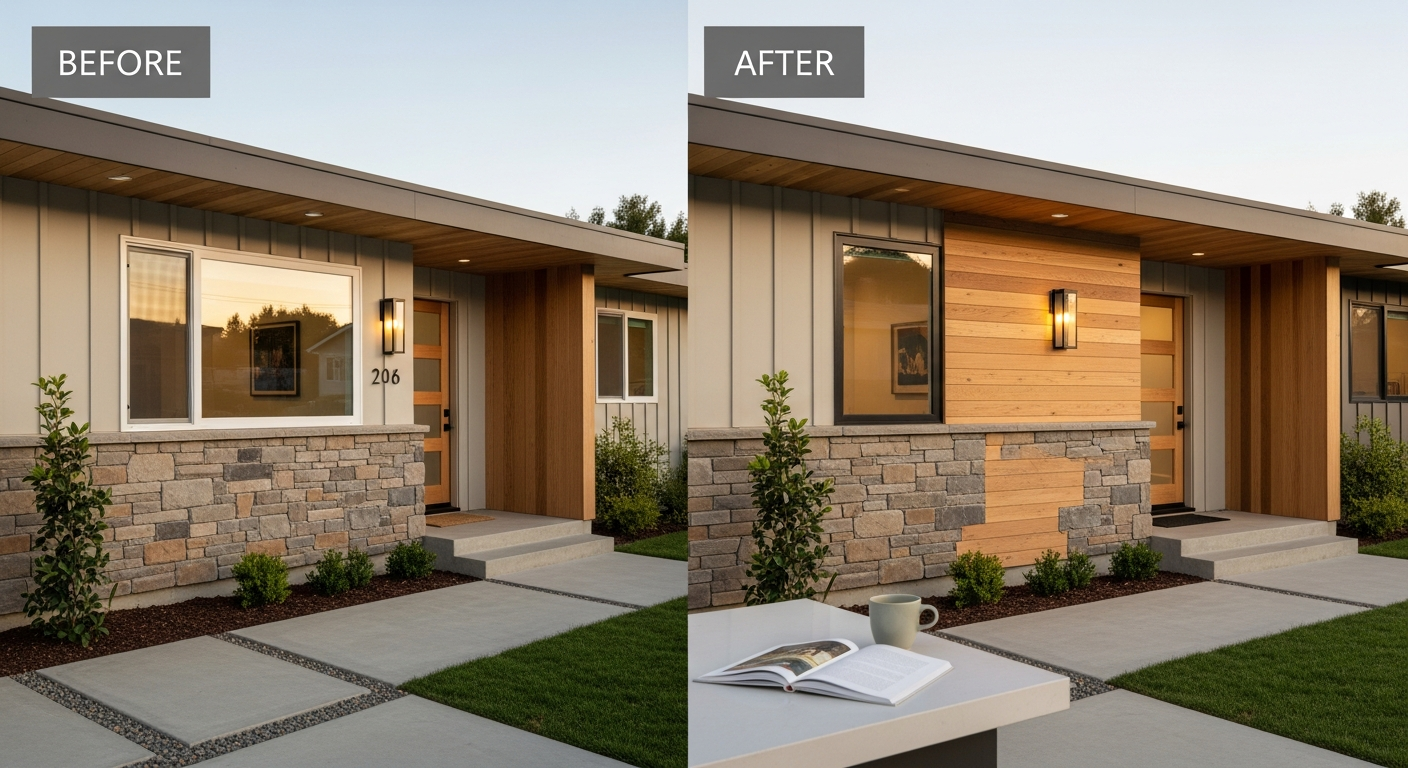
Why Are Bay Area Ranch House Remodels So Popular in 2026?
Ranch house remodels are the single most popular whole-house renovation category we handle across the Bay Area in 2026, accounting for roughly 40% of our project pipeline. The reason is simple: the thousands of single-story ranches built in Silicon Valley between 1950 and 1975 sit on generous lots in highly desirable neighborhoods — from Los Gatos and Saratoga to Palo Alto, Cupertino, and Mountain View — yet the homes themselves desperately need updating.
I'm Bar Benbenisty, founder of Barcci Builders (CA Contractor License #1086047), and my team has completed over 116 design-build projects across the Bay Area. A significant number of those are ranch house remodel before and after transformations that turn dated, compartmentalized floor plans into open, light-filled modern homes — often doubling or tripling the home's livability without tearing it down and starting over.
The appeal comes down to economics and lifestyle. Tearing down a ranch and building new construction in Santa Clara County can cost $600–$900+ per square foot and take 14–20 months after permitting. A comprehensive ranch remodel typically costs $250–$500 per square foot and can be completed in 5–9 months. You preserve the existing foundation, roofline, and much of the framing — saving both money and time while dramatically upgrading every surface, system, and spatial relationship in the home.
As someone who's completed over 116 remodels across the Bay Area, I can tell you that the single biggest missed opportunity I see is homeowners who assume their 1960s ranch "just needs new countertops and paint." The real transformation happens when you reimagine the floor plan itself — opening sightlines, connecting indoor and outdoor living, and replacing that dark hallway-to-hallway layout with a flowing, contemporary plan that respects the ranch's single-story DNA.
How Much Does a Ranch House Remodel Cost in the Bay Area in 2026?
A comprehensive ranch house remodel in the Bay Area costs between $350,000 and $1,200,000+ in 2026, depending on the scope of work, square footage, material selections, and whether you're adding square footage. Based on our 2026 project data from 116+ completed Bay Area projects, here is how costs typically break down by remodel tier:
| Remodel Tier | Scope of Work | Cost per Sq Ft (2026) | Total Cost (1,600 sq ft ranch) | Typical Timeline |
|---|---|---|---|---|
| Cosmetic Refresh | New finishes, fixtures, paint, flooring; no wall removal or structural changes | $150–$250 | $240,000–$400,000 | 8–12 weeks |
| Mid-Range Remodel | Open floor plan, new kitchen and bathrooms, updated electrical and plumbing, some structural work | $250–$400 | $400,000–$640,000 | 4–6 months |
| High-End Gut Renovation | Full gut to studs, new mechanical systems, custom cabinetry, premium materials, possible addition | $400–$600+ | $640,000–$960,000+ | 6–9 months |
| Ranch + Second Story Addition | All of the above plus adding 800–1,200 sq ft second story | $450–$700+ | $900,000–$1,500,000+ | 9–14 months |
These figures reflect Bay Area labor rates and 2026 material costs, which are approximately 15–25% higher than national averages. Key cost drivers unique to Silicon Valley ranch remodels include:
- Structural engineering for open floor plans: Most 1960s ranches have interior bearing walls. Removing them to create open-concept living requires engineered steel beams and new post-to-foundation connections — typically $15,000–$40,000 in structural work alone.
- Electrical panel upgrades: Original 100-amp or 150-amp panels must be upgraded to 200-amp or 400-amp service for modern appliances, EV charging, and HVAC. Santa Clara County requires this for major remodels. Budget $8,000–$15,000.
- Seismic retrofitting: Many Bay Area ranches lack proper foundation bolting and cripple wall bracing. Adding seismic retrofitting during a remodel costs $10,000–$25,000 but is critical — and often required by your building department.
- Permit fees: Permit costs in Santa Clara County range from $15,000–$45,000+ for a whole-house remodel, depending on valuation. San Mateo County Building Department fees are comparable.
Our whole-house remodel service includes a detailed budget breakdown during the design phase so there are no surprises. We use our 3D design rendering process to let you see every room before a single wall comes down — which is critical for managing costs on a ranch renovation.
What Does a Ranch House Remodel Before and After Transformation Actually Look Like?
A ranch house remodel before and after comparison typically reveals dramatic changes in four key areas: floor plan openness, natural light, curb appeal, and material quality. Here is what we see most often across our Bay Area projects, broken down room by room and system by system.
Floor Plan: Before vs. After
Before: The typical 1950s–1970s Bay Area ranch has a closed floor plan with small, isolated rooms connected by a narrow hallway. The kitchen is tucked away from the living room. The dining room is a separate, formal space that rarely gets used. Bedrooms are small with minimal closet space.
After: The transformed ranch features an open-concept kitchen, dining, and living area as the heart of the home. We typically remove 2–4 interior walls (with proper structural engineering), creating a continuous sightline from the front entry to the backyard. The kitchen becomes a social hub with a large island — 8 to 10 feet is standard in our 2026 projects — and the dining area flows seamlessly into indoor-outdoor living.
Kitchen: Before vs. After
Before: Dated laminate countertops, oak or painted-over cabinets, fluorescent lighting, vinyl flooring, and appliances from the 1990s or earlier. A closed-off galley or L-shape with no island and minimal counter space.
After: In 2026, our Bay Area ranch kitchen remodels feature rift-cut white oak or flat-panel custom cabinetry with integrated finger pulls (no visible hardware), Dekton Kreta or Calacatta Viola marble countertops, Miele or Thermador induction cooktops with downdraft or ceiling-mounted ventilation, unlacquered brass fixtures from brands like Waterworks or California Faucets, and herringbone wood floors or large-format porcelain tile. A plaster range hood — hand-applied with an organic, curved shape — has replaced the stainless steel box hood as the focal point in about 60% of our 2026 kitchen projects. Learn more about our kitchen remodeling approach.
Bathrooms: Before vs. After
Before: Pink, green, or yellow tile from the original build. Small vanities with cultured marble tops. Tub-shower combos with fiberglass surrounds. Poor ventilation and no natural light.
After: Spa-like primary bathrooms with curbless showers, zellige tile accent walls in warm earthy tones, floating double vanities with Caesarstone or natural quartzite tops, Kohler orDERA smart toilets, and skylight tubes or enlarged windows for natural light. Our bathroom renovation projects average $65,000–$120,000 per bathroom in ranch remodels, depending on scope and material selections.
Exterior and Curb Appeal: Before vs. After
Before: Flat, horizontal ranch facade with dated stucco or wood siding, aluminum windows, and a barely visible front entry. Minimal landscaping. The house looks like every other ranch on the street.
After: Modern ranch curb appeal in 2026 emphasizes warm, natural materials: cedar cladding or Shou Sugi Ban (charred wood) siding on accent walls, natural stone veneer at the entry, wider modern front doors (pivot or oversized), new aluminum-clad wood windows (Marvin or Milgard), and clean landscaping with native California plantings. Standing-seam metal roofing in matte black or charcoal has become a defining feature of Bay Area ranch transformations. A well-executed exterior update alone can add $150,000–$300,000 in perceived value to a Bay Area ranch home.
Ranch House Remodel vs. Tear Down and Rebuild: Which Is Right for Your Bay Area Home?
For Bay Area homeowners, the decision between a ranch house remodel and a tear-down rebuild comes down to budget, timeline, and how much of the existing structure is worth saving. In approximately 70% of the cases we evaluate, a comprehensive remodel is the smarter investment. Here is why — and when rebuilding makes more sense.
| Factor | Ranch Remodel | Tear Down & Rebuild |
|---|---|---|
| Cost per Sq Ft (2026 Bay Area) | $250–$600 | $600–$900+ |
| Total Cost (2,000 sq ft home) | $500,000–$1,200,000 | $1,200,000–$1,800,000+ |
| Timeline (design through completion) | 6–12 months | 14–24 months |
| Permitting Complexity | Moderate — remodel permits in Santa Clara County take 4–8 weeks | High — new construction permits take 3–6+ months with plan check revisions |
| Zoning Flexibility | Limited to existing footprint unless adding an addition | Full flexibility within current zoning setbacks and FAR limits |
| Sustainability | Reuses 60–80% of existing structure, less landfill waste | Full demolition generates 50–80 tons of debris |
| Property Tax Impact | Assessed value increases only on improvement value | Full reassessment at current market value (Prop 13 reset) |
| Best For | Homes with good bones, solid foundation, desirable single-story layout | Homes with extensive foundation issues, severe water damage, or need for significantly more square footage |
One factor many Bay Area homeowners overlook is the Proposition 13 property tax impact. A remodel that costs $600,000 increases your assessed value by $600,000. But a tear-down and rebuild triggers a full reassessment at current market value — which in neighborhoods like Old Mountain View, Willow Glen, or Downtown Los Gatos could mean your property tax bill triples or quadruples overnight. On a $3 million assessed value, that is an additional $20,000–$30,000 per year in property taxes, every year, for the life of ownership.
We recommend a tear-down only when the foundation has significant structural deficiencies, the home has severe termite or water damage affecting more than 40% of the framing, or the homeowner needs to go from a 1,400 sq ft single-story to a 3,500+ sq ft two-story. For everything else, a well-executed remodel delivers better value. Explore our new construction and whole-house remodel services to see which path fits your project.
What Are the Most Popular 2026 Design Trends for Ranch House Remodels in Silicon Valley?
The most popular 2026 design trends for ranch house remodels in Silicon Valley center on warmth, natural materials, and organic shapes — a decisive move away from the all-white, cold-modern aesthetic that dominated the 2015–2020 era. Based on our 2026 project data, here are the trends we're building most frequently:
1. Warm Earthy Tones Over Sterile White
About 78% of our 2026 Bay Area clients are choosing warm color palettes — think mushroom taupes, warm greiges, terracotta accents, and soft sage greens — over the bright white kitchens and gray LVP flooring that defined the previous decade. The shift is driven by a desire for homes that feel lived-in and inviting rather than like a showroom.
2. Rift-Cut White Oak Everything
Rift-cut white oak has become the default wood species for kitchen cabinetry, bathroom vanities, built-in shelving, and herringbone wood floors in ranch remodels. Its subtle, straight grain and honey tone pair perfectly with the warm, earthy palettes our clients want. We source from Northern California mills when possible to reduce lead times.
3. Plaster Range Hoods and Hand-Applied Plaster Walls
The plaster range hood has replaced the stainless steel box hood as the kitchen centerpiece. We build a custom metal or wood frame, then our plaster artisans apply multiple coats by hand, creating a smooth, organic shape that reads as sculptural rather than industrial. Hand-applied plaster walls — sometimes called Venetian plaster or microcement — are appearing in living rooms and primary bedrooms as accent features.
4. Dekton and Quartzite Over Basic Quartz
While engineered quartz (Caesarstone, Cambria) still dominates at the mid-range level, our high-end ranch remodels in Los Altos, Saratoga, and Atherton increasingly feature Dekton (Kreta, Eter, or Olympus finishes) or natural quartzite (Taj Mahal, Calacatta Viola marble for those who want genuine stone drama). Dekton is especially popular for outdoor kitchens because of its UV and heat resistance.
5. Fluted Details and Integrated Finger Pulls
Fluted or reeded wood panels on kitchen islands, bathroom vanities, and even entry walls are a defining detail of the 2026 ranch remodel. Paired with integrated finger pulls — a routed channel at the top of each cabinet door — this creates a clean, hardware-free look that lets the wood grain take center stage.
6. Indoor-Outdoor Living as a Standard, Not a Luxury
Nearly every ranch remodel we complete in 2026 includes multi-slide or folding glass door systems (Western Window Systems, Fleetwood, or LaCantina) that open the living space to the backyard. In the Bay Area's climate, this effectively doubles your entertaining space for 8–9 months of the year. Our landscaping and exterior team designs the outdoor space to feel like a natural extension of the interior, with matching pavers, built-in seating, and outdoor kitchens.
7. Zellige Tile and Natural Stone Accents
Handmade Moroccan zellige tile — with its irregular edges and hand-glazed surface — is the backsplash and shower accent of choice in 2026 ranch remodels. Colors range from soft white and blush to deep sage and cobalt. For floors and feature walls, natural stone veneer (thin-cut limestone, travertine, or ledgestone) adds texture and warmth.
8. ADU or Garage Conversion Add-Ons
Many ranch homeowners are combining their whole-house remodel with an accessory dwelling unit (ADU) built on the same lot — either a garage conversion or a detached backyard ADU. California's ADU-friendly laws make this straightforward, and bundling it with a ranch remodel saves on general conditions, permitting, and contractor mobilization costs. See our ADU and home additions service for details.
How Long Does a Ranch House Remodel Take in the Bay Area?
A ranch house remodel in the Bay Area takes 5 to 14 months from demolition to final walkthrough in 2026, depending on scope. However, the total project timeline from initial design consultation to move-in is typically 9 to 20 months when you include design, engineering, and permitting. Based on our 2026 project data, here is a realistic timeline breakdown:
- Design and Planning Phase: 6–10 weeks. This includes site measurements, 3D renderings, material selections, and construction documents. Our design-build approach keeps design and construction under one roof, which saves 3–6 weeks compared to hiring a separate architect.
- Engineering and Permit Submission: 2–4 weeks for structural engineering, Title 24 energy calculations, and permit application preparation.
- Permit Review and Approval: 4–8 weeks in Santa Clara County. San Mateo County Building Department approval currently takes 6–10 weeks for whole-house remodels. Expedited plan review is available in some jurisdictions for an additional fee.
- Construction — Cosmetic Remodel: 8–12 weeks for projects that don't involve structural changes.
- Construction — Mid-Range Remodel with Structural Work: 4–6 months. This is the most common timeline for ranch homes where we're opening up the floor plan, updating all kitchens and bathrooms, and refreshing the exterior.
- Construction — Full Gut Renovation or Addition: 6–9 months. Projects that go down to studs or add square footage require more time for framing inspection, rough mechanical inspections, and custom finish installations.
- Construction — Second Story Addition: 9–14 months. Adding a second story to a ranch requires temporary shoring, new structural framing from the foundation up, and coordination of all trades in sequence.
The most common cause of delay in Bay Area ranch remodels is not construction — it is permitting. I always tell our clients to submit permits the moment design documents are finalized, because every week of permit review delay is a week the construction team sits idle. At Barcci Builders, we have established relationships with plan reviewers in Santa Clara County Planning, Town of Los Gatos Building Division, and other local jurisdictions that help us navigate the review process efficiently.
How to Plan Your Ranch House Remodel: A Step-by-Step Bay Area Homeowner's Guide
Planning a successful ranch house remodel requires a structured approach, especially in the Bay Area where permitting complexity and construction costs are significantly higher than other parts of the country. Here is the step-by-step process we follow at Barcci Builders for every ranch renovation:
Step 1: Define Your Goals and Budget Range
Before you contact any contractor, write down your non-negotiables versus nice-to-haves. Do you need an open floor plan? A bigger primary suite? A home office? An ADU? Be honest about your budget range — not the minimum you hope to spend, but the realistic range. For a Bay Area ranch remodel in 2026, a useful starting budget is $300 per square foot for mid-range work and $450+ per square foot for high-end finishes.
Step 2: Choose a Design-Build Contractor (Not a Separate Architect + Contractor)
The design-build model is particularly well-suited to ranch remodels because the design and construction teams collaborate from day one. This means designs stay within budget, structural solutions are considered during the design phase (not after), and the project timeline is compressed. The traditional architect-bid-build model adds 2–4 months to the front end and often results in budget overruns when construction bids come in higher than the architect anticipated.
Step 3: Site Assessment and Feasibility
Our team visits your ranch home to assess the existing structure — foundation condition, framing quality, roof condition, electrical panel, plumbing, and HVAC. We also review your property's zoning (setbacks, floor-area ratio, height limits) to determine what's possible without a variance. Many Cupertino, Sunnyvale, and Campbell ranches have zoning that allows second-story additions or detached ADUs — but you need to verify before investing in design.
Step 4: 3D Design and Material Selection
We create photorealistic 3D renderings of every room so you can see the transformation before committing to construction. This is where material selections happen — countertops, cabinetry, tile, flooring, fixtures, hardware, lighting. Selecting materials during design (not during construction) prevents costly change orders and delays.
Step 5: Permitting
We prepare and submit all permit documents, including structural engineering, Title 24 energy compliance, and any required planning applications. For ranch remodels in the Town of Los Gatos, projects that increase floor area or change the roofline may require Architecture and Site Review, which adds 4–6 weeks to the permitting timeline.
Step 6: Construction
Once permits are approved, construction begins. We provide a detailed project schedule with milestones, weekly progress updates, and a dedicated project manager as your single point of contact. For ranch remodels, the typical construction sequence is: demolition → structural framing → mechanical rough-in (electrical, plumbing, HVAC) → insulation and drywall → finish carpentry and cabinetry → countertops and tile → fixtures and appliances → paint and final finishes → punch list and final inspection.
Step 7: Final Walkthrough and Warranty
Every Barcci Builders project includes a comprehensive final walkthrough and a written warranty on our workmanship. We also provide a maintenance guide specific to your home's new materials and systems.
Ready to start planning your ranch house transformation? Our team serves homeowners across the South Bay and Peninsula, including Campbell, San Jose, and Sunnyvale.
Frequently Asked Questions
How much does it cost to remodel a ranch house in the Bay Area in 2026?
A ranch house remodel in the Bay Area costs between $250 and $600+ per square foot in 2026, depending on scope. For a typical 1,600 sq ft ranch, that translates to $400,000–$960,000+. A cosmetic refresh with new finishes and fixtures starts around $150–$250 per square foot ($240,000–$400,000 total), while a full gut renovation with structural changes, custom cabinetry, and premium materials like Calacatta Viola marble or Dekton countertops runs $400–$600+ per square foot. Based on our data from 116+ completed Bay Area projects at Barcci Builders, the average mid-range ranch remodel in Los Gatos, Saratoga, or Palo Alto costs approximately $500,000–$700,000 in 2026.
Is it cheaper to remodel a ranch house or tear it down and build new in Silicon Valley?
Remodeling a ranch house is significantly cheaper than tearing it down and building new in Silicon Valley. A comprehensive ranch remodel costs $250–$600 per square foot, while new construction costs $600–$900+ per square foot in 2026. For a 2,000 sq ft home, that's a difference of $500,000 or more. Additionally, a tear-down triggers a Proposition 13 property tax reassessment at current market value, which can increase your annual property tax bill by $20,000–$30,000 in high-value Bay Area neighborhoods. A remodel only adds the improvement value to your assessed value, preserving your existing Prop 13 base.
How long does a ranch house remodel take from start to finish in the Bay Area?
From initial design consultation to final walkthrough, a Bay Area ranch house remodel takes 9 to 20 months total in 2026. The design phase takes 6–10 weeks, permitting takes 4–10 weeks depending on jurisdiction (Santa Clara County averages 4–8 weeks; San Mateo County averages 6–10 weeks), and construction takes 8 weeks to 14 months depending on scope. A mid-range remodel with open floor plan conversion typically requires 4–6 months of construction. Adding a second story extends construction to 9–14 months.
Can you add a second story to a ranch house in Los Gatos or Saratoga?
Yes, you can add a second story to a ranch house in Los Gatos and Saratoga, subject to local zoning regulations. In the Town of Los Gatos, second-story additions must comply with height limits (typically 30 feet), setback requirements, and floor-area ratio (FAR) limits, and the project will likely require Architecture and Site Review approval. In Saratoga, the city's residential design review process evaluates second-story additions for neighborhood compatibility. Adding a second story to a Bay Area ranch typically costs $450–$700+ per square foot and takes 9–14 months for construction. Structural engineering is critical because the original single-story foundation and framing must be reinforced to support the additional load.
What is the best kitchen countertop for a ranch house remodel in 2026?
The best kitchen countertop for a ranch house remodel in 2026 depends on your budget and aesthetic. Based on our 2026 project data, 78% of our Bay Area clients choose engineered quartz (Caesarstone or Cambria) for mid-range projects at $75–$120 per square foot installed. For high-end ranch remodels, Dekton (Kreta, Eter, or Olympus finishes) is increasingly popular at $100–$150 per square foot installed — it's virtually indestructible, UV-resistant, and available in stunning large-format slabs. Natural Calacatta Viola marble remains the premium choice at $150–$250+ per square foot installed, prized for its dramatic veining, though it requires sealing and more careful maintenance.
Do I need a permit to remodel a ranch house in Santa Clara County?
Yes, you need building permits for virtually any structural, electrical, plumbing, or mechanical work on a ranch house remodel in Santa Clara County. This includes removing or modifying walls, adding or moving windows, upgrading electrical panels, rerouting plumbing, and installing new HVAC systems. Cosmetic work like painting, replacing flooring (without subfloor modification), and swapping out fixtures generally does not require a permit. Permit fees in Santa Clara County range from $15,000 to $45,000+ for a whole-house remodel depending on project valuation. Permit approval currently takes 4–8 weeks for residential remodels. Working without permits is risky — unpermitted work can create legal liability, complicate future home sales, and void your insurance coverage.
What are the most popular design trends for ranch house remodels in 2026?
The most popular 2026 design trends for ranch house remodels in the Bay Area include: rift-cut white oak cabinetry with integrated finger pulls, plaster range hoods with organic curved shapes, warm earthy color palettes replacing sterile all-white interiors, Dekton and natural quartzite countertops, zellige tile backsplashes and shower accents, herringbone wood floors, hand-applied plaster accent walls (microcement), unlacquered brass fixtures, induction cooktops from Miele or Thermador, fluted wood detail panels, cedar cladding or Shou Sugi Ban siding on exteriors, and multi-slide glass doors connecting indoor and outdoor living spaces. The overarching theme is warmth, natural materials, and organic textures.
Should I live in my ranch house during the remodel or move out?
For a mid-range or full gut ranch house remodel, we strongly recommend moving out for the duration of construction. A whole-house renovation involves demolition dust, exposed framing, disconnected plumbing and electrical systems, and loud construction activity starting at 7:00–8:00 AM daily. Living on-site creates safety concerns (especially with children), slows down the construction crew, and significantly increases homeowner stress. Based on our experience with 116+ Bay Area projects, clients who move out see their remodels completed 10–15% faster because the construction team has unimpeded access to all areas. For cosmetic-only remodels limited to one area of the home (such as a kitchen-only renovation), it may be possible to stay — but expect 8–12 weeks of disruption.