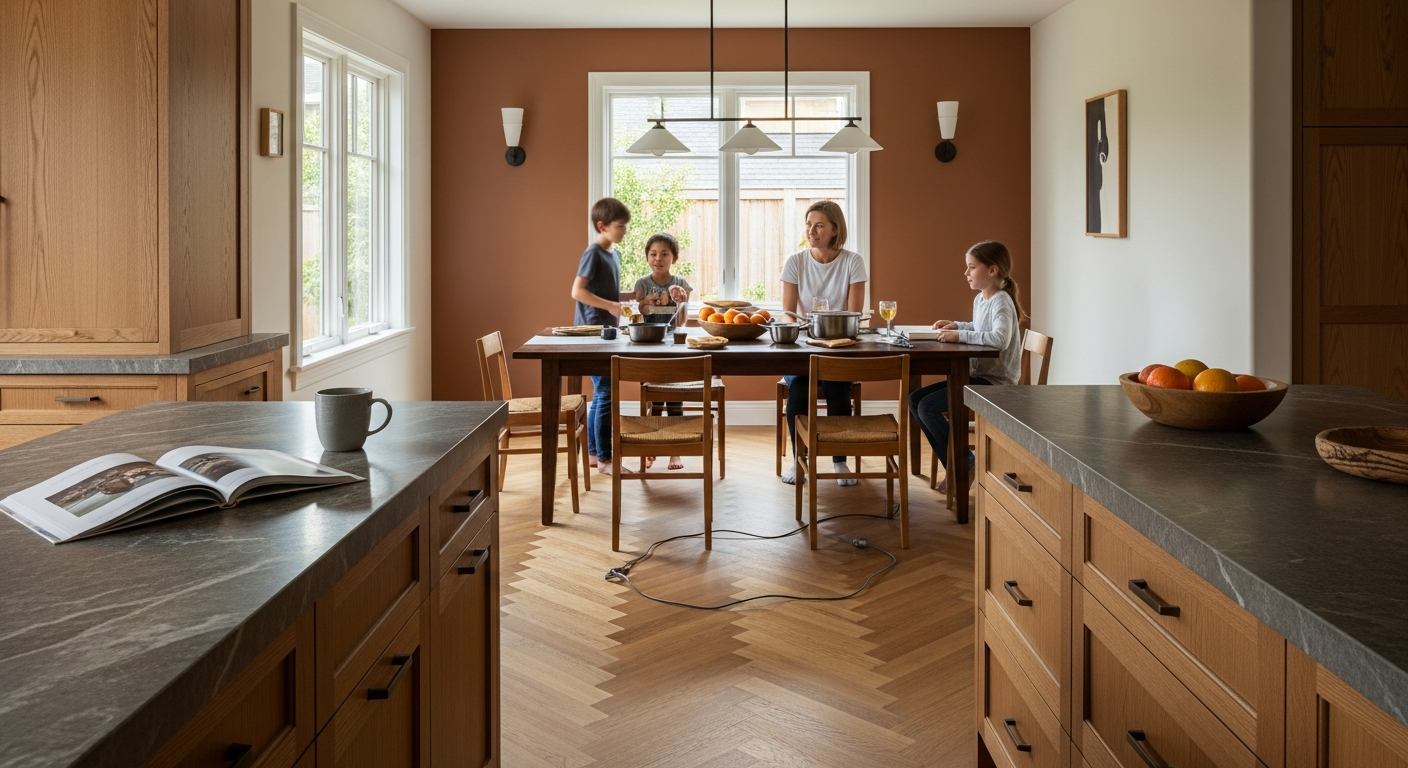
Can You Live in Your Home During a Remodel?
Yes, you can live in your home during most remodels — and roughly 70% of our Bay Area clients choose to do exactly that. Based on our 116+ completed projects across Los Gatos, Saratoga, Palo Alto, and the broader Silicon Valley, staying in your home during renovation is not only possible but often the smarter financial decision, saving families $8,000–$25,000 in temporary housing costs. That said, it requires real planning, honest expectations, and a contractor who knows how to phase the work intelligently.
I'm Bar Benbenisty, founder of Barcci Builders (CA Contractor License #1086047), and after managing whole-house renovations where families with young children lived on-site for four months straight, I can tell you this: living in your home during a remodel is manageable when you treat it like a logistics project, not just a design project.
The honest answer is that it depends on the scope. A bathroom renovation that takes 4–6 weeks? Absolutely livable if you have a second bathroom. A full gut whole-house remodel where every room is torn to studs simultaneously? That's when temporary housing becomes necessary. Most projects fall somewhere in between, and the strategies in this guide will help you navigate that middle ground comfortably.
Here's a reality check I give every homeowner in our initial consultation: the dust will find its way into rooms you thought were sealed. The noise will start earlier than you'd like. And at least one evening, you'll eat takeout sitting on a cooler in your garage. But when you see your new rift-cut white oak kitchen island taking shape or your Calacatta Viola marble backsplash going up, you'll understand why most of our clients say staying was worth it.
How Long Does a Home Remodel Take in the Bay Area in 2026?
A home remodel in the Bay Area takes anywhere from 6 weeks for a single-room renovation to 8–12 months for a comprehensive whole-house remodel in 2026. Understanding realistic timelines is the first step to deciding whether you can live through the process — because "we'll be done in two months" hits differently at month four.
Based on our 2026 project data from Silicon Valley and the Peninsula, here are the realistic timelines our clients should expect:
| Project Type | Typical Duration | Livability Rating | Temporary Housing Needed? |
|---|---|---|---|
| Kitchen remodel (cosmetic refresh) | 4–6 weeks | Moderate | Rarely |
| Kitchen remodel (full gut) | 10–16 weeks | Challenging | Sometimes (2–4 weeks) |
| Primary bathroom renovation | 4–8 weeks | Easy (with 2nd bath) | No |
| Whole-house remodel (phased) | 5–8 months | Moderate to challenging | Partial stay possible |
| Whole-house remodel (full gut) | 6–12 months | Very difficult | Usually yes |
| ADU / home addition | 4–7 months | Easy (separate structure) | No |
| New construction | 10–18 months | N/A | N/A |
One critical factor Bay Area homeowners often underestimate is permit approval time. In Santa Clara County, permit approval currently takes 4–8 weeks for standard residential remodels, and San Mateo County Building Department timelines run 3–6 weeks depending on project complexity. These timelines sit before construction begins, so factor them into your living arrangement plans.
As someone who's completed over 116 remodels across the Bay Area, the single biggest timeline mistake I see homeowners make is assuming the permit phase will go quickly. In cities like Los Gatos and Saratoga, historic review or design review boards can add 2–6 additional weeks. Plan for the longer end, and you'll be pleasantly surprised if things move faster.
Should You Stay or Move Out During a Renovation?
Whether you should stay or move out during a renovation depends on three factors: the scope of work, how many livable rooms remain during construction, and your personal tolerance for disruption. For most Bay Area remodels — especially phased kitchen or bathroom projects — staying home is the better financial and practical choice.
Here's the decision framework I walk through with every client:
Stay Home If:
- At least one functional bathroom and one sleeping area remain unaffected throughout construction
- The project can be phased so that your kitchen or primary bath is offline for no more than 3–4 weeks at a time
- You have a garage, covered patio, or spare room to set up a temporary kitchen station
- You work from home and want to monitor progress (many of our Cupertino and Palo Alto tech clients prefer this)
- You have pets — moving animals to temporary housing adds significant stress and cost
Move Out If:
- The entire HVAC system is being replaced and the house will have no heating/cooling for weeks
- Structural work requires removing load-bearing walls, ceilings, or floors throughout the home
- Asbestos or lead paint abatement is required (common in pre-1980 Bay Area homes)
- You have infants, elderly family members, or anyone with severe respiratory conditions
- Every bathroom in the home is being renovated simultaneously
The financial math matters too. Temporary housing in Silicon Valley in 2026 — whether that's a short-term rental, Airbnb, or extended-stay hotel — runs $4,000–$8,000 per month in areas like Los Gatos, Menlo Park, or Los Altos. A family staying out for three months during a whole-house remodel could spend $12,000–$24,000 on housing alone, plus storage costs of $300–$600/month. For many homeowners, that money is better invested in the remodel itself — upgrading to a Thermador induction cooktop or adding heated floors in the primary bath.
Our recommendation for most kitchen remodeling projects: stay home, but plan to move out of the kitchen zone for 2–4 weeks during the most intensive demolition and rough-in phase. We'll show you how to set up a temporary kitchen that actually works in the next section.
8 Practical Tips for Living Through a Home Renovation
Living through a home renovation successfully comes down to preparation, communication, and a few tactical decisions that most homeowners don't think about until it's too late. These eight tips come directly from feedback our clients have given us across 116+ projects in the Bay Area — the things they wished they'd known on day one.
1. Build a Temporary Kitchen That Actually Functions
This is the single most impactful step you can take. Don't just set a microwave on a folding table and call it done. Our most comfortable clients set up a dedicated station with:
- A portable induction burner (we recommend the Breville PolyScience — $150 and restaurant-quality)
- A mini-fridge (not a dorm fridge — spend the extra $50 for a 4.5 cu. ft. model)
- An electric kettle, toaster oven, and Instant Pot
- A plastic bin system for dishes, utensils, and pantry staples
- A small table or countertop surface — even a plywood sheet on sawhorses works
Set this up in a room as far from the construction zone as possible. A garage, dining room, or spare bedroom all work. One of our Los Altos clients converted their covered patio into a full outdoor kitchen for three months — complete with a portable gas grill and a prep table — and said it was the best part of their renovation.
2. Seal Off Construction Zones with Real Barriers
Plastic sheeting taped to doorframes is the minimum. For serious dust containment — especially during demolition, drywall sanding, or tile cutting — we install ZipWall dust barriers and use negative air pressure machines with HEPA filters. Ask your contractor about this specifically. If they shrug it off, that's a red flag.
Construction dust isn't just annoying; it's a health concern. Bay Area homes built before 1978 may contain lead paint, and homes built before 1990 frequently have asbestos in floor tiles, popcorn ceilings, or pipe insulation. Professional abatement is non-negotiable in these cases — Santa Clara County requires certified abatement contractors for any disturbance of known asbestos-containing materials.
3. Establish a Clear Daily Schedule with Your Contractor
At Barcci Builders, we provide every live-in client with a written daily schedule: crew arrival time (typically 7:30–8:00 AM), expected loud work windows, and departure time (usually 4:30–5:00 PM). Knowing when the tile saw will be running versus when the electrician is quietly pulling wire makes an enormous difference in your sanity.
We also designate a "quiet start" buffer — no demolition or loud cutting before 8:30 AM — for clients with young children or anyone who works from home. This is something you should negotiate upfront, not after the jackhammer wakes you at 7:15 AM.
4. Create a Dust-Free Sanctuary Room
Choose one room — ideally a bedroom — and make it your untouchable zone. Seal the door with weatherstripping or a door sweep, run a standalone HEPA air purifier (the Blueair Blue 211+ handles rooms up to 540 sq. ft. for under $300), and keep that door closed at all times. This becomes your retreat for sleeping, working from home, or just breathing clean air after a heavy demolition day.
5. Protect and Move Your Valuables Early
Before demolition day one, move anything irreplaceable out of the construction path. We're talking artwork, family photos, electronics, and anything dust-sensitive. Our team lays Ram Board floor protection and hangs protective sheeting, but the vibration from demolition can knock items off shelves in adjacent rooms. A $50 plastic storage bin from Home Depot is cheap insurance for your grandmother's china.
6. Plan for Bathroom Logistics
If your only bathroom is being renovated, you have two options: ask your contractor to phase the work so the toilet and shower remain functional until the new fixtures are ready to install (adding 1–2 weeks to the timeline but preserving livability), or rent a portable restroom trailer. Not a construction port-a-potty — a restroom trailer with running water, a flushing toilet, and a small shower. These cost $800–$1,500/month in the Bay Area and are far more dignified than the alternative.
7. Communicate with Your Neighbors
This is especially important in neighborhoods like Willow Glen, Downtown Los Gatos, and Old Mountain View where homes are closer together. Give your immediate neighbors a heads-up before construction starts: expected timeline, hours of work, and your phone number in case anything comes up. Most Bay Area cities restrict construction noise to specific hours — Los Gatos allows construction activity from 8:00 AM to 8:00 PM Monday through Friday and 9:00 AM to 6:00 PM on Saturdays, with no work on Sundays or holidays.
8. Build In "Escape" Days
Plan to leave the house during the loudest phases — typically demolition (days 1–5) and drywall sanding. Take a weekend trip, work from a coffee shop, or visit family. Our most relaxed clients build 2–3 planned escape days per month into their renovation timeline. It's a small investment that pays enormous dividends in patience and perspective.
How Much Does It Cost to Live in Your Home During a Remodel vs. Moving Out?
Living in your home during a remodel typically costs $500–$2,000 in added expenses over the project duration, while moving out costs $12,000–$30,000+ for a typical Bay Area whole-house renovation timeline. The financial case for staying home is strong — but there are hidden costs on both sides that homeowners overlook.
| Expense Category | Living In (Estimated Cost) | Moving Out (Estimated Cost) |
|---|---|---|
| Temporary housing (3–5 months) | $0 | $12,000–$40,000 |
| Storage unit | $0–$200 (partial storage) | $300–$600/month |
| Temporary kitchen setup | $200–$500 | $0 |
| HEPA air purifiers (2–3 units) | $300–$600 | $0 |
| Increased takeout/dining out | $800–$2,000 | $400–$1,000 (still elevated) |
| Portable restroom trailer (if needed) | $800–$1,500/month | $0 |
| Pet boarding or extra pet care | $0 | $500–$2,000 |
| Commute changes / gas / parking | $0 | $200–$800 |
| Moving costs (out and back) | $0 | $1,500–$4,000 |
Total estimated cost comparison: Living in your home adds roughly $1,500–$4,000 to your overall budget. Moving out for a 4-month Bay Area remodel adds $15,000–$30,000+ — and that number climbs significantly in premium markets like Menlo Park, Atherton, and Hillsborough where short-term rentals regularly exceed $8,000/month.
There's one important caveat: living in the home can occasionally slow down the construction timeline by 5–10%, because crews need to work around occupied spaces, maintain cleaner work zones, and sometimes delay noisy work. On a $250,000 whole-house remodel, that timeline extension might cost $2,000–$5,000 in extended overhead. Even accounting for that, staying home is almost always the more economical choice.
From a project management standpoint, I actually prefer when clients stay. They see issues in real time, make faster decisions on change orders, and develop a better relationship with the crew. Our project completion satisfaction scores are consistently higher when homeowners are present and engaged — not because they're micromanaging, but because communication happens organically instead of through emails and phone calls.
What Remodel Projects Are Easiest to Live Through in 2026?
The easiest remodels to live through are those that affect a contained, non-essential area of your home — meaning you still have full access to a kitchen, at least one bathroom, and bedrooms. ADU and home additions top the list because they're largely built outside your existing living envelope.
Here's how we rank common 2026 Bay Area remodel projects by livability, based on our direct client feedback:
Easiest to live through:
- ADU construction — The work happens in your yard or above your garage. You'll hear construction noise, but your home remains 100% functional. This is why ADUs remain the most popular addition type we build in San Jose and Campbell.
- Guest bathroom renovation — As long as it's not your only bathroom, this is a 4–6 week project that barely impacts daily life.
- Exterior work and landscaping — Landscaping and exterior renovations like cedar cladding installation, natural stone veneer, or new hardscaping keep all disruption outside.
- Garage conversion — Similar to an ADU in terms of livability, though you lose your parking and storage space.
Moderately challenging:
- Kitchen remodel (phased) — Manageable with a temporary kitchen setup. The hardest stretch is typically the 2–3 weeks when plumbing and electrical are being roughed in and no sink or cooking surface is available.
- Primary bedroom/bathroom suite — You relocate to a guest room for the duration. Doable if you have the space.
Most challenging:
- Full kitchen gut with structural changes — Removing walls, rerouting plumbing stacks, and replacing subfloor means the kitchen zone is uninhabitable for 10–16 weeks.
- Whole-house remodel (all rooms touched) — Even phased, this means you're perpetually living in a construction zone. We typically recommend clients plan to move out for the 3–4 most intensive weeks.
The 2026 design trends our clients are most excited about — hand-applied plaster walls, microcement flooring, herringbone wood floor patterns, and plaster range hoods — tend to be finishing details that happen in the final weeks of a project. By that point, the loudest and messiest work is behind you, and living in the home during the finish phase is relatively comfortable. It's actually one of the most enjoyable parts — watching your Dekton Kreta countertops get installed or your unlacquered brass hardware go on for the first time.
How to Prepare Your Home Before Renovation Starts
Preparing your home before renovation starts takes 1–2 weeks of focused effort and makes the entire construction phase dramatically more livable. Think of it as investing 10 hours upfront to save 100 hours of frustration over the next several months.
Here is the pre-renovation checklist we provide to every Barcci Builders client — refined over 116+ Bay Area projects:
Two Weeks Before Demolition
- Document everything: Walk through the entire house with your phone and photograph every room, including close-ups of existing conditions — floors, walls, countertops, fixtures. This protects you if any accidental damage occurs in non-construction areas.
- Set up your temporary kitchen: Don't wait until demo day. Have your induction burner, mini-fridge, and supplies ready in your designated non-construction room at least three days before work begins.
- Pack and protect valuables: Remove artwork, fragile items, and anything dust-sensitive from walls and shelves within 20 feet of the construction zone. Vibration from demolition travels further than you'd expect — especially in the single-story ranch homes common in Sunnyvale and Mountain View.
- Identify and clear the crew access path: Your contractor's team needs a clear route from their vehicles to the work zone. Clear any hallways, remove rugs, and ensure exterior gates are accessible. This prevents accidental damage and speeds up the work.
- Arrange pet accommodations: Dogs and cats don't handle demolition noise well. If possible, arrange for your pets to stay with family or at a daycare facility during the first week of demolition — the loudest phase.
Three Days Before Demolition
- Turn off and empty the refrigerator if the kitchen is being demolished (donate perishables to a local food bank)
- Run your HEPA air purifiers for 24 hours in your sanctuary room to establish a baseline of clean air
- Confirm the daily construction schedule with your project manager in writing
- Stock up on groceries that don't require your full kitchen — think slow cooker meals, salads, sandwiches, and no-cook dinners for the first two weeks
- Set up a designated "communication corner" — a whiteboard or shared digital document where you and your contractor can leave notes, questions, and updates daily
One thing our 3D design rendering process helps with enormously: because clients see photorealistic visualizations of their finished space before construction begins, they make fewer change orders during the build. And fewer change orders mean fewer delays, which means fewer weeks of living in a construction zone. According to our 2026 project data, clients who go through our full 3D rendering process before construction experience 40% fewer change orders than those who rely on 2D plans alone.
Frequently Asked Questions
How long does a whole-house remodel take in the Bay Area?
A whole-house remodel in the Bay Area takes 5–12 months in 2026, depending on scope, permit timelines, and whether the project is phased or a full gut renovation. Based on our 116+ completed projects at Barcci Builders, a phased whole-house remodel where clients continue living in the home averages 6–8 months from demolition to final walkthrough. Full gut renovations where the home is vacated average 8–12 months. Permit approval through Santa Clara County adds 4–8 weeks before construction begins, and cities like Los Gatos with design review requirements can add another 2–6 weeks.
Is it safe to live in a house during renovation with kids?
It is generally safe to live in a house during renovation with children as long as proper dust containment, air filtration, and access restrictions are in place. The key concerns are construction dust (which can trigger asthma and allergies), lead paint exposure in homes built before 1978, and physical safety around tools and open work areas. At Barcci Builders, we install ZipWall barriers with HEPA-filtered negative air machines, and we secure the construction zone with physical barriers at the end of every workday. For homes with confirmed lead paint — common in older neighborhoods like Professorville in Palo Alto or Willow Glen in San Jose — we follow EPA RRP (Renovation, Repair, and Painting) Rule protocols and recommend families of young children relocate during the abatement phase, which typically lasts 3–7 days.
How much does temporary housing cost during a remodel in Silicon Valley?
Temporary housing during a remodel in Silicon Valley costs $4,000–$8,000 per month in 2026 for a furnished short-term rental or extended-stay suite. Costs vary significantly by location: a two-bedroom Airbnb in Campbell or Sunnyvale may run $4,500–$6,000/month, while comparable options in Los Gatos, Palo Alto, or Menlo Park range from $6,500–$10,000/month. Extended-stay hotels like Residence Inn or Homewood Suites typically cost $5,000–$7,500/month in the South Bay. For a typical 4-month whole-house remodel, total temporary housing costs range from $16,000–$32,000 — not including storage ($300–$600/month) and moving costs ($1,500–$4,000 round trip).
What is the best way to set up a temporary kitchen during a remodel?
The best way to set up a temporary kitchen during a remodel is to dedicate a non-construction room (garage, dining room, or spare bedroom) with five essentials: a portable induction burner, a 4.5+ cubic foot mini-fridge, an electric kettle, a toaster oven or countertop convection oven, and a multi-cooker like an Instant Pot. Add a folding table or plywood surface for prep, a plastic bin system for pantry items and utensils, and a basin or large bowl for hand-washing dishes. Plan meals that require minimal cooking for the first two weeks of demolition. Based on feedback from our Bay Area clients, the temporary kitchen setup costs $200–$500 and makes the difference between a tolerable renovation and a miserable one.
How do you keep dust out of the rest of the house during a remodel?
Keeping dust out of the rest of the house during a remodel requires three layers of protection: physical barriers (ZipWall poles with heavy-duty plastic sheeting sealing off the construction zone), negative air pressure (a commercial exhaust fan pulling dusty air out through a window, so clean air flows into the construction zone rather than dust flowing out), and standalone HEPA air purifiers in occupied rooms. At Barcci Builders, we also seal HVAC vents in the construction zone to prevent dust from circulating through the ductwork into other rooms — a step many contractors skip. Door sweeps or weatherstripping on the doors between construction and living areas add another layer of protection. Even with all these measures, expect some fine dust migration; running a HEPA purifier 24/7 in your bedroom is the best insurance.
Do remodels take longer if you live in the home during construction?
Remodels can take 5–10% longer if you live in the home during construction, based on our project data at Barcci Builders. The additional time comes from crews working around occupied spaces, maintaining cleaner work zones with more frequent cleanup, and occasionally delaying loud work to accommodate the homeowner's schedule. On a 12-week kitchen remodel, this might add 1–2 extra weeks. However, having the homeowner on-site often speeds up decision-making on selections and change orders, which can offset the logistical delays. In our experience, the net timeline impact is minimal — typically less than one week on most projects.
What hours can contractors work in Los Gatos and Santa Clara County?
In Los Gatos, construction activity is permitted from 8:00 AM to 8:00 PM Monday through Friday and 9:00 AM to 6:00 PM on Saturdays, with no construction allowed on Sundays or recognized holidays. Santa Clara County unincorporated areas follow similar guidelines but enforcement varies. Most cities in the Bay Area — including Saratoga, Cupertino, Palo Alto, and San Jose — have comparable noise ordinances restricting construction hours. At Barcci Builders, our standard crew hours are 7:30 AM to 4:30 PM, with no loud demolition or power tool use before 8:30 AM as a courtesy to homeowners living on-site and their neighbors.
Should I move furniture out before a remodel or can the contractor work around it?
You should move furniture out of the construction zone and any immediately adjacent rooms before a remodel begins. Contractors can technically work around furniture, but it slows the project, increases the risk of damage, and prevents proper dust containment. At a minimum, clear everything from the room being renovated, move items in adjacent rooms away from shared walls, and protect anything remaining with moving blankets or plastic sheeting. For a whole-house remodel, consider renting a portable storage container ($150–$250/month in the Bay Area) or a climate-controlled storage unit ($200–$400/month) to store large pieces. Our team handles floor protection with Ram Board and wall protection with corner guards, but furniture should be the homeowner's responsibility to relocate before day one.