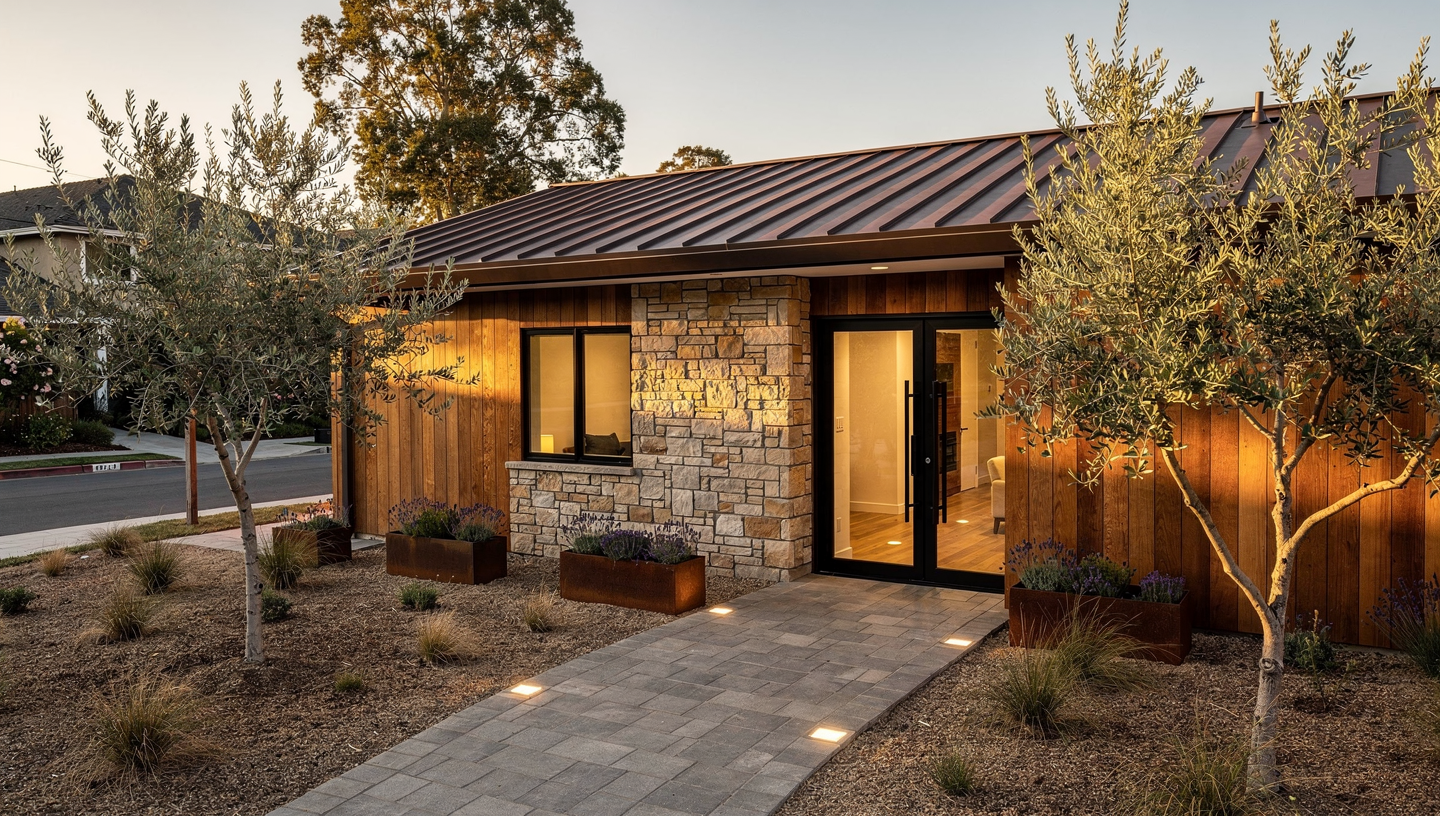
Why Palo Alto Whole-Home Renovations Are a Different Beast
Renovating a home in Palo Alto isn't like remodeling anywhere else in the country. You're working with homes that often carry significant historical character — mid-century ranches, Eichlers, California bungalows — sitting on land worth more per square foot than most entire properties elsewhere. The stakes are high, the permitting process is thorough, and the expectations are accordingly elevated.
Here's what makes Silicon Valley whole-home projects particularly complex:
- City of Palo Alto permits require detailed architectural drawings, energy compliance (Title 24), and sometimes design review depending on your neighborhood overlay zone.
- Lead and asbestos testing is routinely required in pre-1980 homes before any demo begins — this adds time and cost that surprises many first-time remodelers.
- HOA overlays in neighborhoods like Crescent Park or Old Palo Alto add an extra layer of approval that can extend your pre-construction phase by 4–8 weeks.
- Subcontractor demand across San Jose, Menlo Park, and the broader Bay Area means skilled trades book out fast — coordination matters enormously.
At Barcci Builders, we've navigated all of this across 116+ projects in the region. Understanding the local landscape before you break ground is the difference between a smooth renovation and a costly, drawn-out ordeal.
Real Costs: What a Complete Renovation Actually Runs in This Market
Let's talk numbers honestly. Silicon Valley construction costs are among the highest in the nation, and Palo Alto sits near the top of that range. For a complete home renovation, here's what we typically see:
- Entry-level full renovation (updating finishes, fixtures, flooring throughout): $200–$350 per square foot
- Mid-range gut renovation (new layout, updated systems, quality finishes): $350–$550 per square foot
- High-end luxury transformation (structural changes, custom everything, smart home integration): $550–$900+ per square foot
For a typical 2,000 sq ft Palo Alto home, that translates to a realistic budget range of $400,000 to $1.1 million depending on scope. The variables that move the needle most:
- Structural changes — opening walls, raising ceilings, or adding square footage (even modest ADU additions) can shift your budget significantly
- Kitchen and bathrooms — these rooms carry the highest cost-per-square-foot; a full kitchen remodel alone often runs $80,000–$180,000 in this market
- Systems replacement — older Palo Alto homes frequently need full electrical panel upgrades, new HVAC, and updated plumbing
- Material lead times — custom cabinetry, European fixtures, and specialty tile can add 8–16 weeks if not ordered early
Our advice: build in a 15% contingency. In this market, it's not pessimism — it's preparation.
Timeline Reality: From First Call to Final Walkthrough
One of the biggest frustrations homeowners face is underestimating how long a complete renovation actually takes. Here's a realistic breakdown for a full-scope project in Palo Alto or nearby Menlo Park, Atherton, or Los Altos:
- Design & Planning (8–14 weeks): This includes architectural drawings, our 3D design and rendering process, structural engineering, and material selections. Skipping or rushing this phase is where most renovation disasters begin.
- Permitting (4–12 weeks): Palo Alto's building department is thorough. Complex projects or those requiring planning department review take longer. We submit complete, well-documented packages to minimize back-and-forth.
- Construction (4–9 months): A true whole-home renovation — not just cosmetic updates — takes time done right. Scope, structural complexity, and subcontractor scheduling all factor in.
- Punch List & Final Inspections (2–4 weeks): This phase gets rushed too often. We don't consider a project done until every detail passes both city inspection and your personal walkthrough.
Total realistic timeline from first conversation to move-in: 10–18 months for a comprehensive renovation. If someone quotes you 6 months for a full gut-and-rebuild, ask a lot of follow-up questions.
How to Vet a Design-Build Contractor in Silicon Valley
In a market this competitive, not all contractors are created equal. Here's what to look for when evaluating a design-build firm for your Palo Alto home renovation:
- Local permit history: Ask specifically about projects permitted in Palo Alto or Santa Clara County. Navigating local jurisdictions requires experience, not just general contractor credentials.
- In-house design vs. third-party coordination: A true design-build model — where design, engineering, and construction are coordinated under one roof — dramatically reduces miscommunication and cost overruns. This is exactly how Barcci Builders operates.
- References from comparable projects: A firm that's done great work in Saratoga or Los Gatos understands the material and craftsmanship expectations that come with high-value Bay Area homes.
- Transparency on subcontractors: Ask who actually does the tile work, the electrical, the finish carpentry. Long-term relationships with skilled trades matter more than you'd think.
- Detailed written contracts: Scope of work, allowances, change order processes, payment schedules — everything should be in writing before a single wall comes down.
Whether you're in Palo Alto, Cupertino, or Woodside, the contractor you choose will live in your home (figuratively) for the better part of a year. Chemistry, communication, and competence matter equally.
What to Prioritize When You Can't Do Everything at Once
Not every homeowner has an unlimited budget, and even those who do benefit from smart sequencing. Here's how we typically advise clients prioritizing a phased approach:
- Phase 1 — Structure and Systems: Foundation, roof, electrical panel, HVAC, and plumbing. These aren't glamorous, but you cannot put beautiful finishes on a home with failing systems.
- Phase 2 — Kitchen and Primary Bathroom: These two rooms carry the highest ROI in the Bay Area market. A kitchen remodel done well can return 70–80% of cost in Palo Alto home valuations — often more in a competitive market. Don't forget the primary bathroom either.
- Phase 3 — Secondary spaces and exterior: Secondary bedrooms, bathrooms, landscaping and exterior improvements, and any ADU or addition work.
The key with phasing is to plan for the whole vision upfront — even if you execute in stages. Rerouting plumbing twice because you didn't account for Phase 3 during Phase 1 is an expensive lesson we help clients avoid from day one.
Frequently Asked Questions
Do I need to move out during a complete home renovation in Palo Alto?
For a true whole-home renovation, yes — in almost every case. Once structural, electrical, and plumbing work begins, the home is not safely or comfortably livable. Budget for temporary housing (typically 6–12 months) as a real line item in your project cost.
How long does Palo Alto permit approval typically take for a whole-home remodel?
Plan for 6–12 weeks for over-the-counter permits on standard renovations, and 3–6 months for projects requiring planning commission review, such as additions, ADUs, or homes in designated historic or design review zones.
Will a complete renovation increase my property taxes in California?
In California, only the value of improvements — not the entire home — is reassessed under Prop 13. So if you add square footage or significantly increase assessed value, expect a partial reassessment on that added value. A full gut renovation of existing space typically triggers a reassessment of the renovated portions.
What's the difference between a design-build firm and hiring an architect separately?
With a design-build firm like Barcci Builders, design and construction are coordinated under one contract and one team — which reduces miscommunication, budget surprises, and scheduling gaps. Hiring an architect separately and then bidding out construction can work, but the handoff between design and build is where cost overruns and delays most commonly occur.