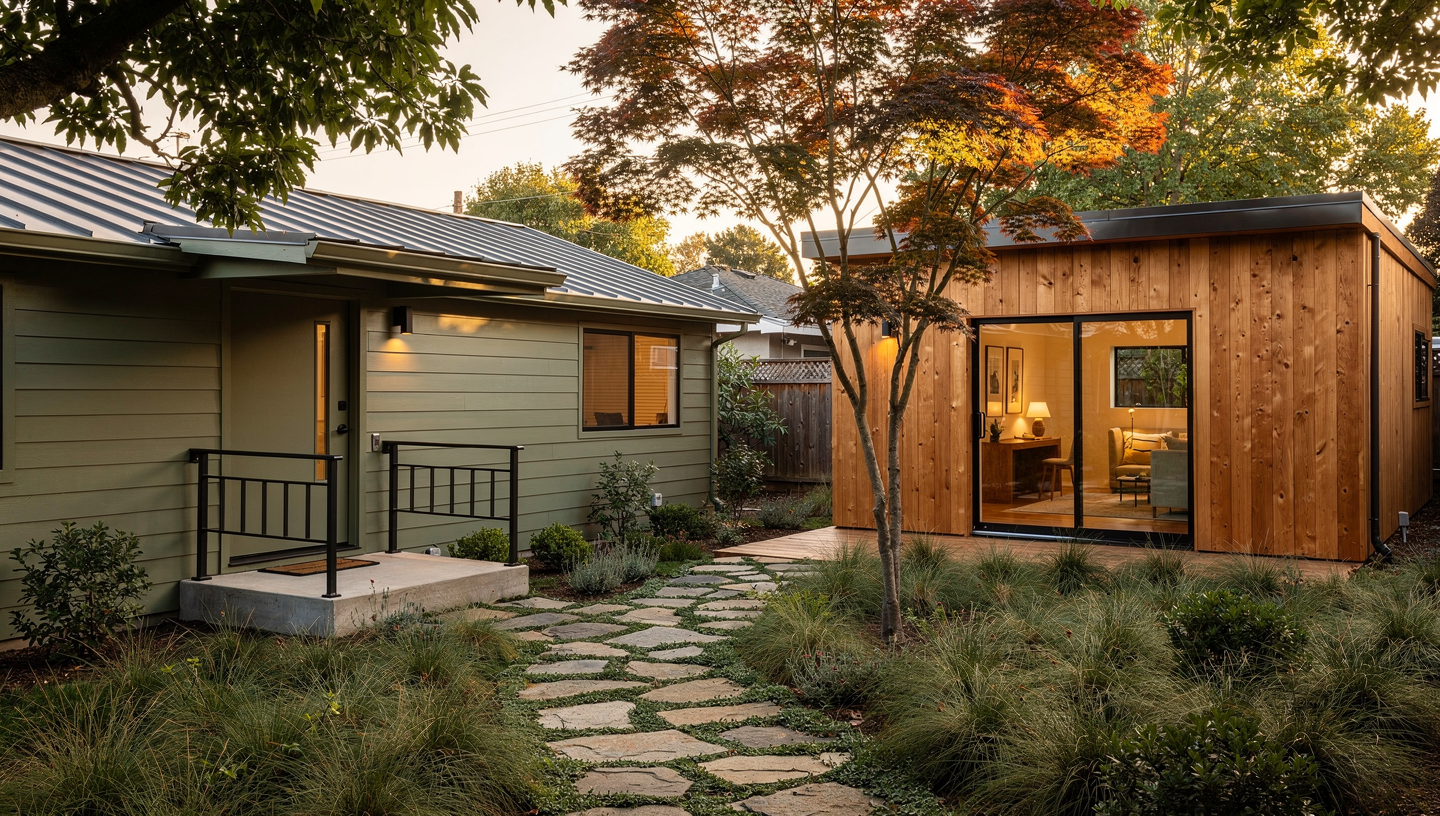
Attached ADU vs Detached ADU in the Bay Area: Pros, Cons, and Costs
As Bay Area homeowners continue to search for creative solutions to maximize their property value and address the region's housing shortage, Accessory Dwelling Units (ADUs) have emerged as a popular and practical option. At Barcci Builders, with over 116 successful projects completed throughout Los Gatos and the surrounding Bay Area, we've helped countless families navigate the decision between attached and detached ADUs.
The choice between an attached or detached ADU represents one of the most significant decisions you'll make during your ADU home addition project. Each option offers distinct advantages and challenges, from privacy considerations to construction costs, zoning requirements to rental potential. Understanding these differences is crucial for making an informed decision that aligns with your family's needs, budget, and long-term goals.
Founded by Bar Benbenisty, Barcci Builders has witnessed firsthand how the right ADU choice can transform both living situations and financial prospects for Bay Area families. Whether you're considering housing aging parents, creating rental income, or providing space for adult children, the attached versus detached question will significantly impact your project's success.
Understanding ADUs in the Bay Area Context
The Bay Area's unique housing landscape makes ADUs particularly attractive investments. With median home prices consistently ranking among the nation's highest and rental markets showing strong demand, ADUs offer homeowners a pathway to offset housing costs while contributing to regional housing solutions.
California's progressive ADU legislation, combined with local Bay Area ordinances, has streamlined the approval process for both attached and detached units. However, specific requirements vary significantly between municipalities. In Los Gatos, for example, setback requirements and height restrictions may influence whether an attached or detached design better suits your property.
Attached ADUs typically involve extending your existing home's footprint or converting existing space such as garages, basements, or unused rooms. Detached ADUs, conversely, require constructing an entirely separate structure on your property, subject to zoning requirements and available space.
Both options must comply with California's ADU laws, which generally allow units up to 1,200 square feet, though local ordinances may impose additional restrictions. Understanding these parameters early in your planning process helps ensure your chosen design meets all regulatory requirements while maximizing your investment potential.
Attached ADUs: Advantages and Considerations
Attached ADUs offer several compelling advantages that make them attractive for many Bay Area homeowners. The primary benefit lies in cost efficiency, as attached units typically leverage existing infrastructure including foundations, utilities, and structural elements. This shared infrastructure significantly reduces construction costs compared to building an entirely separate structure.
From a design perspective, attached ADUs often integrate more seamlessly with existing home architecture. When executed properly by experienced contractors like our team at Barcci Builders, attached units can appear as natural extensions of the original home, potentially preserving or even enhancing curb appeal and neighborhood aesthetics.
Construction timelines for attached ADUs generally prove shorter than detached alternatives. Since major infrastructure components already exist, the building process focuses primarily on interior buildout and any necessary structural modifications. This efficiency translates to reduced labor costs and faster occupancy timelines.
However, attached ADUs also present certain limitations that homeowners must carefully consider. Privacy represents perhaps the most significant challenge, as shared walls, common entrances, or proximity to main house living areas can create noise transfer and reduced privacy for both occupants and tenants.
Rental market considerations also differ for attached units. Some tenants prefer the independence and privacy that detached units provide, potentially limiting your rental pool. Additionally, attached ADUs may present challenges for future resale, as some buyers might view them as less desirable than detached alternatives.
Zoning and permit requirements for attached ADUs, while generally more straightforward than detached units, still require careful attention to building codes, fire safety requirements, and accessibility standards. Our ADU home addition specialists work closely with local building departments to ensure all attached ADU projects meet or exceed these requirements.
Detached ADUs: Benefits and Challenges
Detached ADUs offer maximum privacy and independence, making them particularly appealing for multi-generational living situations or rental income generation. The physical separation between units eliminates many noise and privacy concerns associated with attached alternatives, creating distinct living environments that many occupants prefer.
Design flexibility represents another significant advantage of detached ADUs. Without the constraints of existing home architecture, homeowners can explore diverse design options, from modern minimalist structures to traditional cottage-style units. This flexibility often allows for better site utilization and can create unique outdoor spaces that enhance overall property appeal.
From an investment perspective, detached ADUs often generate higher rental income due to increased privacy and independence. Tenants frequently view detached units as more desirable, potentially commanding premium rents and attracting longer-term occupants who treat the space as their primary residence rather than temporary accommodation.
Detached ADUs also offer superior resale value in many cases. Future buyers often perceive separate structures as more versatile, suitable for various uses including rental income, guest accommodations, or home office space. This versatility can translate to increased property values and broader market appeal.
However, detached ADUs also present several challenges that homeowners must address. Construction costs typically exceed attached alternatives due to the need for separate foundations, complete utility connections, and independent structural systems. Site preparation, excavation, and utility trenching add complexity and expense to the construction process.
Permitting requirements for detached ADUs often prove more complex than attached units. Setback requirements, height restrictions, and lot coverage limitations can significantly impact design options and may require professional architectural services to navigate successfully. Some properties may lack sufficient space for detached construction while meeting all zoning requirements.
Construction timelines for detached ADUs generally extend longer than attached alternatives, as builders must complete all aspects of construction from foundation to finish work. Weather delays and utility connection schedules can further extend project timelines, requiring patience and flexibility from homeowners.
Cost Analysis: Breaking Down the Numbers
Understanding the financial implications of attached versus detached ADUs is crucial for making an informed decision. Based on our extensive experience with Bay Area projects, Barcci Builders has developed comprehensive cost models that help homeowners budget effectively for their ADU investments.
Attached ADU costs in the Bay Area typically range from $150 to $300 per square foot, depending on the complexity of integration with existing structures and the level of finish selected. A 600-square-foot attached ADU might cost between $90,000 and $180,000, including permits, design, and construction. These costs can vary significantly based on factors such as structural modifications required, utility upgrades needed, and local permit fees.
Detached ADU costs generally range from $200 to $400 per square foot, reflecting the need for complete infrastructure development. A similarly-sized detached unit could cost between $120,000 and $240,000, representing a 25-35% premium over attached alternatives. However, these higher upfront costs often generate superior rental income and property value increases that can justify the additional investment.
Hidden costs deserve careful consideration in both scenarios. Attached ADUs may require significant electrical, plumbing, or HVAC upgrades to the main house infrastructure, potentially adding $10,000-$30,000 to project costs. Detached units require separate utility connections and often more extensive site preparation, which can add $15,000-$40,000 to base construction costs.
Permit fees and soft costs also vary between attached and detached projects. While specific fees depend on local municipality requirements, detached ADUs often incur higher permit costs due to their classification as new construction. Design and architectural fees may also differ, with detached units sometimes requiring more extensive professional services for site planning and utility coordination.
Financing considerations can significantly impact project affordability. Many homeowners find it easier to secure financing for attached ADUs through home equity loans or lines of credit, as lenders often view them as home improvements. Detached ADUs may require construction loans with different terms and qualification requirements.
Market Demand and Rental Potential
The Bay Area's robust rental market creates excellent opportunities for ADU rental income, regardless of whether you choose attached or detached construction. However, market preferences and rental rates can vary significantly between the two options, influencing long-term investment returns.
Detached ADUs typically command 10-20% higher rental rates than comparable attached units, primarily due to increased privacy and independence. In markets like Los Gatos, detached ADUs often rent for $2,500-$4,000 monthly, while attached units might achieve $2,200-$3,500 for similar square footage and amenities.
Tenant demographics also differ between attached and detached ADUs. Young professionals and couples often prefer detached units for entertaining and lifestyle flexibility. Attached ADUs may appeal more to graduate students, temporary workers, or individuals seeking more affordable housing options with less emphasis on privacy.
Vacancy rates tend to be lower for detached ADUs, as tenants often view them as more permanent housing solutions. This stability can provide more predictable rental income and reduce turnover costs associated with marketing, screening, and preparing units for new tenants.
However, attached ADUs offer certain rental market advantages. Lower rental rates can attract tenants during economic downturns or seasonal market fluctuations. Additionally, some tenants appreciate the security and community feeling associated with attached units, particularly in neighborhoods where detached rentals might feel isolated.
Zoning and Permit Considerations
Navigating Bay Area zoning requirements represents one of the most complex aspects of ADU development. Each municipality maintains specific ordinances that can significantly impact whether attached or detached ADUs are feasible for your property.
Setback requirements often determine detached ADU feasibility. Most Bay Area cities require minimum distances between detached ADUs and property lines, typically ranging from 4-10 feet depending on local ordinances. Properties with limited yard space may find these requirements prohibitive for detached construction, making attached ADUs the only viable option.
Height restrictions similarly influence design options for both attached and detached ADUs. While attached units must conform to existing rooflines in many cases, detached ADUs may face separate height limitations that could restrict second-story construction or loft designs.
Lot coverage requirements can significantly impact detached ADU feasibility. Many cities limit the total percentage of lot coverage by structures, including both main houses and accessory buildings. Properties with large main houses or limited lot sizes may exceed these coverage limits with detached ADU construction.
Parking requirements vary significantly between municipalities and ADU types. Some cities waive parking requirements for ADUs located within transit-oriented areas, while others mandate specific parking provisions. Detached ADUs may offer more flexibility for addressing parking requirements through creative site design.
Fire safety and building code compliance differs between attached and detached ADUs. Attached units must often meet more stringent fire separation requirements, including fire-rated walls and separate egress paths. Detached units face different challenges related to utility connections and accessibility compliance.
Design and Aesthetic Considerations
The visual impact of your ADU choice extends beyond personal preferences to neighborhood compatibility and property value implications. Both attached and detached ADUs can enhance property aesthetics when designed thoughtfully, but each approach presents distinct opportunities and challenges.
Attached ADUs benefit from architectural integration opportunities that can create cohesive, unified property appearances. When designed by experienced professionals like our team at Barcci Builders, attached additions can appear as natural extensions of existing homes, maintaining neighborhood character while adding functional space.
Matching existing materials, rooflines, and architectural details helps attached ADUs blend seamlessly with original construction. This integration often requires careful attention to proportions and scale to avoid overwhelming existing structures or creating awkward visual relationships.
Detached ADUs offer greater design freedom but require careful consideration of neighborhood context and property relationships. While creative architectural expression is possible, detached units should complement rather than compete with main house architecture and surrounding neighborhood character.
Landscape integration plays a crucial role in both ADU types but proves particularly important for detached units. Thoughtful site planning can create private outdoor spaces for both main house and ADU occupants while maintaining visual connectivity across the property.
Scale and proportion considerations differ significantly between attached and detached ADUs. Attached units must respect existing building proportions to avoid appearing as awkward additions. Detached units can establish their own architectural identity while maintaining appropriate scale relationships with surrounding structures.
Long-term Value and Flexibility
The long-term value proposition of your ADU investment depends heavily on the attached versus detached decision. Both options can provide excellent returns, but their value creation mechanisms and flexibility for future uses differ significantly.
Property value increases from ADUs typically range from 20-30% of construction costs, though this varies considerably based on local market conditions and ADU quality. Detached ADUs often generate higher property value increases due to their perceived versatility and independence.
Flexibility for future use represents a crucial consideration for long-term value. Detached ADUs can serve various functions throughout their lifecycle, from rental units to home offices, art studios, or guest accommodations. This versatility appeals to future buyers and can justify premium pricing during resale.
Attached ADUs may offer less functional flexibility but provide other advantages such as aging-in-place opportunities for elderly family members or seamless integration for multi-generational living situations. These benefits can provide significant value for families with specific housing needs.
Maintenance and operational costs differ between attached and detached ADUs. Attached units often share utility systems and may benefit from economies of scale for heating, cooling, and maintenance. Detached units require independent systems but offer the advantage of isolated maintenance issues that don't affect main house operations.
Future expansion possibilities also vary between ADU types. Attached ADUs may offer opportunities for further integration with main house spaces, while detached units might accommodate vertical additions or separate expansions more easily.
Making the Right Choice for Your Property
Selecting between attached and detached ADUs requires careful evaluation of multiple factors specific to your property, family situation, and financial goals. At Barcci Builders, we guide homeowners through this decision-making process by conducting comprehensive site evaluations and needs assessments.
Site analysis represents the foundation of effective ADU planning. Our team evaluates lot dimensions, setback requirements, utility access, and existing infrastructure to determine which ADU type offers the best combination of feasibility and value for your specific property.
Family needs assessment helps identify whether privacy, independence, or integration better serves your long-term goals. Multi-generational living situations may benefit from attached ADUs that facilitate family interaction while providing separate living spaces. Investment-focused projects might favor detached construction for maximum rental income potential.
Budget considerations extend beyond initial construction costs to include long-term operational expenses, maintenance requirements, and return on investment projections. Our detailed cost analysis helps homeowners understand the total financial commitment and expected returns for each ADU type.
Timeline requirements can influence ADU type selection, particularly when housing needs are urgent. Attached ADUs typically offer faster completion schedules, while detached units may require extended construction periods that could impact temporary housing arrangements.
Future flexibility deserves careful consideration in ADU type selection. Families anticipating changing needs over time might benefit from the versatility that detached ADUs provide, while those with specific long-term plans might find attached units perfectly suited to their requirements.
Frequently Asked Questions
1. Which type of ADU provides better rental income potential?
Detached ADUs typically generate 10-20% higher rental income than attached units due to increased privacy and independence. However, attached ADUs may offer more consistent occupancy during economic downturns due to lower rental rates and reduced competition.
2. Are there significant differences in permit approval times?
Attached ADUs generally receive faster permit approval since they're considered additions to existing structures. Detached ADUs may require additional review for setbacks, utilities, and site planning, potentially extending approval timelines by 2-4 weeks.
3. Which option works better for aging parents or multi-generational living?
Both options can work well, but the choice depends on desired independence levels. Attached ADUs facilitate easy interaction and care assistance, while detached units provide more privacy and independence. Consider mobility needs and emergency access when deciding.
4. How do utility costs compare between attached and detached ADUs?
Attached ADUs often share utility systems with main houses, potentially reducing overall utility costs. Detached ADUs require separate utility connections and independent systems, typically resulting in higher utility expenses but offering better usage control and billing separation for rental situations.
5. What are the main zoning challenges for each ADU type?
Detached ADUs face setback requirements, height restrictions, and lot coverage limitations that may limit feasibility on smaller properties. Attached ADUs must comply with fire separation requirements and may face restrictions on structural modifications to existing buildings.
6. Which ADU type offers better resale value?
Detached ADUs typically provide superior resale value due to perceived versatility and independence. However, well-designed attached ADUs in desirable neighborhoods can also significantly increase property values, particularly when they seamlessly integrate with existing architecture.
7. Are there financing differences between attached and detached ADUs?
Attached ADUs are often easier to finance through home equity loans since lenders view them as home improvements. Detached ADUs may require construction loans with different terms and qualification requirements, though both options typically qualify for various financing programs.
8. How long does construction typically take for each ADU type?
Attached ADUs generally require 3-6 months for completion, depending on complexity and required structural modifications. Detached ADUs typically take 4-8 months due to foundation work, complete utility connections, and full structural construction requirements.
Choosing between attached and detached ADUs represents a significant decision that will impact your property for years to come. At Barcci Builders, our experienced team helps Bay Area homeowners navigate this choice by providing comprehensive analysis, expert construction services, and ongoing support throughout the ADU home addition process. Contact us today to discuss how we can help you maximize your property's potential through thoughtful ADU development.