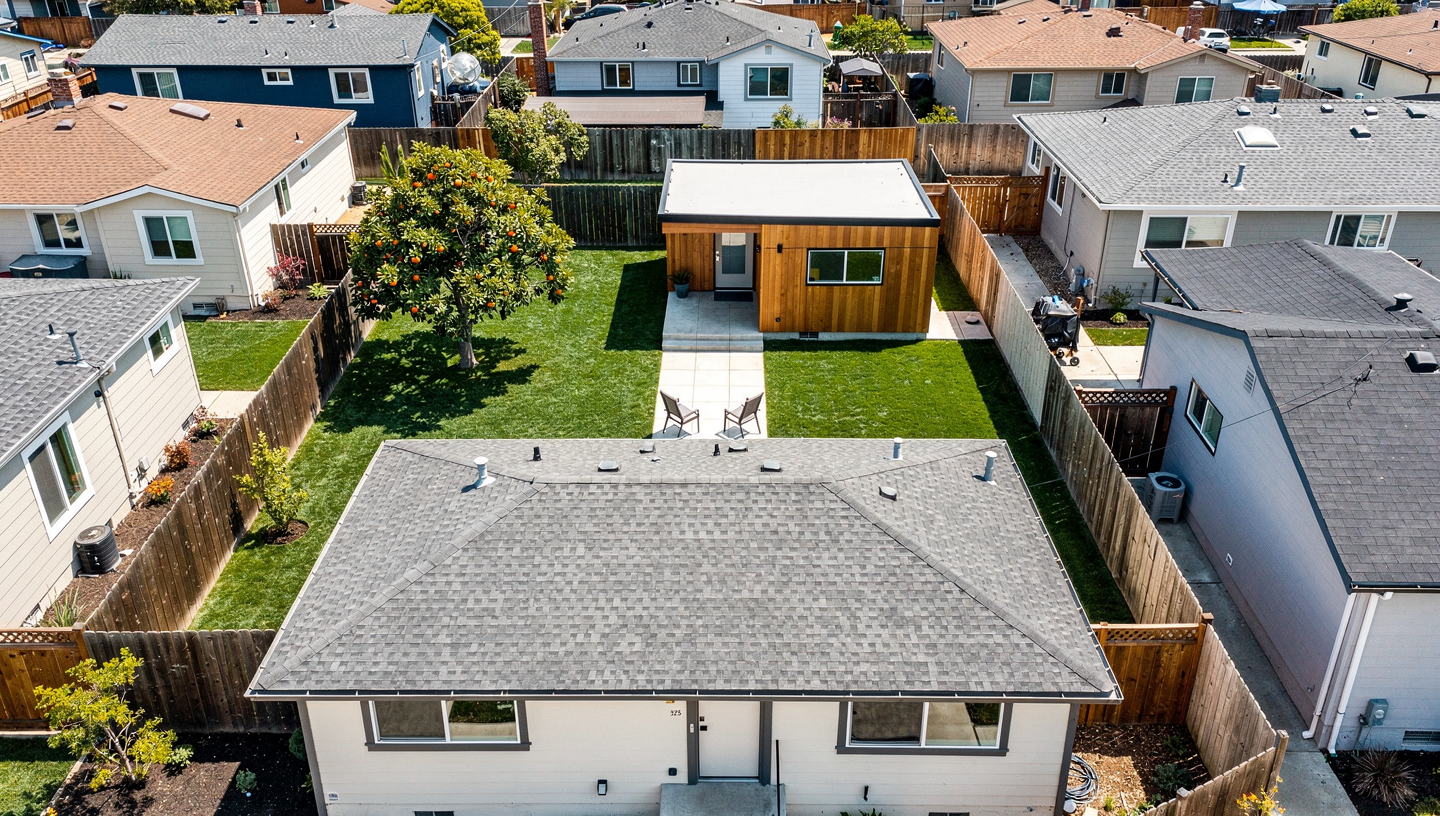
California ADU Setback Requirements: What Changed in 2026
California's ADU setback requirements in 2026 follow state minimums of 4 feet from side and rear property lines, with no front setback required for most projects. However, local jurisdictions can impose stricter requirements, making it essential to understand both state law and your city's specific rules.
Based on our team's experience completing 116+ ADU projects across the Bay Area, I've seen how setback requirements can make or break a project's feasibility. The 2026 updates to California Government Code Section 65852.2 have streamlined many rules, but local variations still create complexity for homeowners.
In Los Gatos, where Barcci Builders is based, we regularly navigate setback requirements that differ from neighboring cities like Saratoga and Campbell. Understanding these nuances is crucial for maximizing your ADU's size and placement while ensuring permit approval.
How Do California State ADU Setback Rules Work in 2026?
California state law establishes minimum setback requirements that all cities must follow, but allows local governments to impose stricter standards. The state minimums are 4 feet from side and rear property lines, with zero front setback required for most ADUs.
The key changes in 2026 focus on streamlining the approval process and reducing barriers to ADU construction. State law now prohibits cities from requiring setbacks greater than 4 feet for side and rear yards, unless specific safety or design standards apply.
| Setback Type | California State Minimum | Local Override Allowed | Common Bay Area Variation |
|---|---|---|---|
| Front Yard | 0 feet (match primary residence) | Yes, can require more | 10-20 feet typical |
| Side Yard | 4 feet maximum requirement | No, cannot exceed 4 feet | 4-5 feet common |
| Rear Yard | 4 feet maximum requirement | No, cannot exceed 4 feet | 4-10 feet varies by city |
From our experience with ADU projects in Silicon Valley, cities interpret these rules differently. Some focus on building envelope calculations, while others emphasize fire safety clearances that can effectively increase required setbacks.
What Are the Specific Setback Requirements by Bay Area City?
Bay Area cities implement varying setback requirements within state law limits, with significant differences between jurisdictions. Los Gatos requires 5-foot side setbacks while Palo Alto allows 4-foot minimums, demonstrating how local rules impact ADU design.
After completing ADU projects in over 15 Bay Area cities, our team has compiled the most current setback requirements for 2026. These requirements directly affect your ADU's maximum size, orientation, and construction costs.
| City | Front Setback | Side Setback | Rear Setback | Special Requirements |
|---|---|---|---|---|
| Los Gatos | 20 feet | 5 feet | 10 feet | Design review required |
| Saratoga | 25 feet | 4 feet | 8 feet | Tree preservation zones |
| Palo Alto | 15 feet | 4 feet | 6 feet | Bike parking setback |
| Mountain View | 10 feet | 4 feet | 4 feet | Solar access requirements |
| Cupertino | 20 feet | 5 feet | 10 feet | Architectural compatibility |
These variations significantly impact project feasibility. In Los Altos, we've designed ADUs that maximize the building envelope while respecting stricter front setbacks. Each city's requirements reflect local character and infrastructure considerations.
Can You Reduce ADU Setback Requirements Through Variances?
Setback variances for ADUs are possible but challenging to obtain, with success rates varying significantly by jurisdiction and project circumstances. Most Bay Area cities prefer design modifications over variance approvals for ADU projects.
In our experience, variance applications succeed most often when demonstrating hardship due to unusual lot configurations, existing structures, or topographical constraints. The process typically adds 3-6 months to project timelines and costs $3,000-$8,000 in additional fees.
Successful variance strategies we've employed include:
- Demonstrating compliance with fire safety despite reduced setbacks
- Providing enhanced landscaping or screening
- Showing neighborhood compatibility through 3D renderings
- Proving economic hardship without the variance
Alternative approaches often prove more effective than seeking variances. Creative design solutions, such as incorporating existing structures or utilizing attached ADU configurations, can maximize space within standard setbacks. Our team regularly explores these options during initial site analysis to avoid lengthy variance processes.
How Do Setback Requirements Affect ADU Size and Design?
Setback requirements directly determine your ADU's maximum footprint, with typical Bay Area lots allowing 600-1,200 square foot ADUs depending on setback constraints. Strategic design within setback limits often proves more cost-effective than seeking variances.
Key design strategies for working within setbacks include:
- Vertical expansion: Two-story designs maximize square footage within footprint limits
- Attached configurations: Connecting to existing structures can reduce effective setback requirements
- Corner lot advantages: Multiple street frontages often provide more flexible placement options
- Existing structure integration: Converting garages or additions may have different setback rules
Material choices also impact setback compliance. Fire-resistant materials like Dekton countertops and microcement walls can sometimes allow reduced clearances from property lines. Our team incorporates these considerations early in the design process for kitchen and living spaces.
Smart orientation within setbacks optimizes natural light and privacy. North-facing ADUs in tight setbacks benefit from clerestory windows, while south-facing units can incorporate larger glazing areas for passive solar heating.
What Are Common Setback Violations and How to Avoid Them?
The most common ADU setback violations involve encroachments from roof overhangs, HVAC equipment, and utility connections that extend beyond the main structure. These violations can result in $500-$5,000 fines and required modifications.
From our construction experience, setback violations typically occur during three phases: design, construction, and final inspection. Proper planning and communication with contractors prevents most issues before they become costly problems.
Common violation scenarios we've observed:
- Roof eaves and gutters: Overhangs exceeding 2 feet often encroach into setback areas
- Air conditioning units: Ground-mounted equipment placed too close to property lines
- Stairs and decks: Exterior access features extending beyond planned footprint
- Foundation variations: Slight shifts during construction that push walls into setback zones
Prevention strategies include detailed site surveys, accurate 3D modeling, and regular inspection during construction. Our team uses GPS-grade surveying equipment to verify setback compliance before pouring foundations.
Working with experienced ADU contractors familiar with local setback requirements significantly reduces violation risk. We maintain relationships with inspectors in Los Gatos, Saratoga, and surrounding areas to ensure smooth approval processes.
How Do Fire Safety Codes Impact ADU Setback Requirements?
Fire safety codes can effectively increase ADU setback requirements beyond local minimums, particularly for structures with windows facing property lines or using combustible materials. These requirements vary by local fire department jurisdiction and can add 1-3 feet to practical setbacks.
California Building Code Chapter 7A establishes fire safety standards that interact with setback requirements, especially in high fire hazard areas common throughout the Bay Area. Our team coordinates with local fire departments early in the design process to identify potential conflicts.
Fire safety considerations affecting setbacks include:
- Window protection: Windows within 3 feet of property lines may require fire-rated glazing
- Wall construction: One-hour fire-rated assemblies required for walls closer than 5 feet to property lines
- Roof materials: Class A fire-rated roofing mandatory in many Bay Area locations
- Vegetation clearance: Defensible space requirements can extend effective setbacks in hillside areas
In cities like Monte Sereno and Woodside, wildfire risk creates additional setback considerations. We incorporate fire-resistant materials like unlacquered brass fixtures and plaster walls that meet both aesthetic and safety requirements.
Coordination with utility companies also affects setback planning. PG&E requires specific clearances from electrical equipment that can impact ADU placement, particularly for detached units requiring new service connections.
What's the Future of ADU Setback Requirements in California?
California's 2026-2027 legislative session will likely bring further ADU setback simplification, with proposed bills aiming to establish uniform 3-foot minimums statewide. These changes could override local requirements and significantly expand ADU development opportunities.
Based on current legislative trends and our involvement with industry organizations, several key changes appear likely:
- Statewide uniformity: Elimination of local setback variations above state minimums
- Reduced minimums: Potential reduction from 4-foot to 3-foot side and rear requirements
- Front setback standardization: Possible elimination of front setback requirements for all ADU types
- Fire safety integration: Streamlined fire code compliance processes
These potential changes could significantly impact property values and development feasibility across the Bay Area. Properties currently constrained by strict local setbacks could see increased ADU potential, while areas with lenient current rules might see minimal change.
Our team stays current with legislative developments to advise clients on timing their ADU projects. Sometimes waiting 6-12 months for rule changes can unlock significantly larger or better-positioned ADUs.
For homeowners considering ADU projects, understanding both current requirements and likely future changes helps inform timing and design decisions. We regularly attend planning commission meetings in San Jose, Santa Clara, and other Bay Area cities to track local implementation of state requirements.
Frequently Asked Questions
What are the minimum ADU setback requirements in California?
California state law requires maximum setbacks of 4 feet from side and rear property lines for ADUs, with no front setback required unless local rules specify otherwise. Cities cannot require setbacks greater than 4 feet for side and rear yards under 2026 state law.
Can cities require larger ADU setbacks than state law?
Cities can require larger front setbacks and may have additional requirements for specific situations, but cannot exceed the 4-foot maximum for side and rear setbacks established by California state law. Local fire safety and design standards may create additional practical setback requirements.
How do I find my city's specific ADU setback requirements?
Contact your city's planning department or check their ADU guidelines online. Each Bay Area city maintains specific setback requirements within state law limits. Many cities have ADU handbooks detailing local requirements and application processes.
Do attached ADUs have different setback requirements?
Attached ADUs typically follow the same setback requirements as the primary residence since they're considered additions rather than separate structures. This can sometimes provide more favorable setback treatment than detached ADUs.
What happens if my ADU violates setback requirements?
Setback violations can result in stop-work orders, fines of $500-$5,000, and required modifications or removal of non-compliant portions. It's essential to verify setback compliance before beginning construction to avoid these costly issues.
Can roof overhangs extend into required setback areas?
Roof overhangs typically can extend up to 2 feet into required setback areas in most Bay Area cities, but this varies by jurisdiction. Gutters, eaves, and other projections beyond 2 feet usually require additional setback clearance.
Do corner lots have different ADU setback requirements?
Corner lots often have more complex setback requirements due to multiple street frontages, but may offer more placement flexibility. The side yard facing the secondary street may be treated as a front yard with different setback requirements.
How do setback requirements affect ADU size limits?
Setback requirements directly limit your ADU's footprint on the lot. Combined with height limits and lot coverage requirements, setbacks determine the maximum possible ADU size for your specific property configuration.
Are there setback exceptions for existing structures being converted to ADUs?
Converting existing structures like garages to ADUs may allow non-conforming setbacks to remain, provided the conversion doesn't expand into setback areas. This can be a significant advantage for maximizing ADU space on constrained lots.
What's the difference between setback requirements and easements?
Setbacks are minimum distances required from property lines for new construction, while easements are legal rights for others to use portions of your property. Both affect where you can build your ADU, but easements typically create permanent no-build zones.