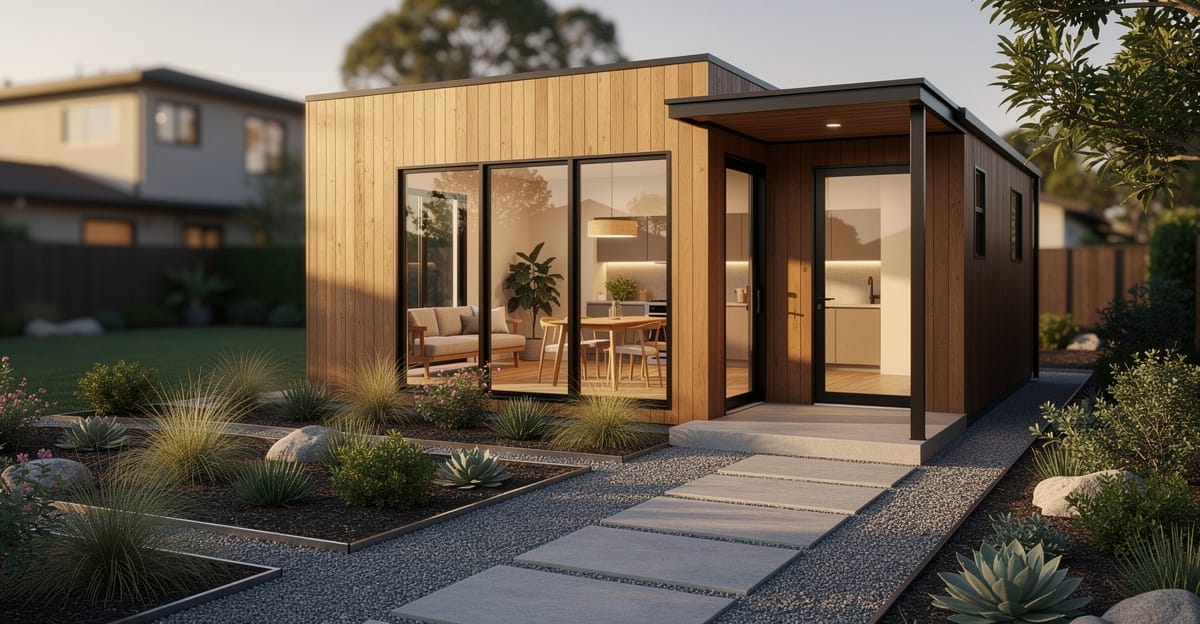
ADU in Redwood City 2026: What Homeowners Need to Know First
Building an ADU in Redwood City in 2026 costs between $180,000 and $420,000 depending on size, type, and finish level - with detached units in the $250,000–$420,000 range and garage conversions landing between $180,000 and $280,000. Redwood City sits in San Mateo County, which means you are working with a different permitting jurisdiction, different fee schedules, and slightly different ADU ordinance language than the Santa Clara County cities we most often build in.
Based on our 116+ completed ADU and remodeling projects across the Bay Area, Redwood City is one of the most ADU-friendly cities in San Mateo County. The planning department has streamlined its process significantly since 2020, and the city aligns closely with California state ADU law (AB 68, SB 9, AB 2221, AB 976) with minimal additional local restrictions layered on top. That said, there are things specific to Redwood City that every homeowner should understand before breaking ground.
In this guide I'll walk you through costs, permit requirements, timelines, San Mateo County rules, and what our 2026 project data shows for ADUs in this part of the Peninsula.
ADU Cost in Redwood City 2026: Real Numbers by Type
Our 2026 project data shows that ADU costs in Redwood City track closely with Peninsula-wide averages, running roughly 8–12% higher than South Bay (Santa Clara County) cities due to higher labor costs and San Mateo County fee structures.
Here is a breakdown of what different ADU types cost in Redwood City today:
| ADU Type | Typical Size | Cost Range (2026) | Cost Per Sq Ft |
|---|---|---|---|
| Detached new construction | 600–1,200 sq ft | $260,000–$420,000 | $380–$420/sq ft |
| Garage conversion | 400–600 sq ft | $180,000–$280,000 | $320–$380/sq ft |
| Attached addition | 400–800 sq ft | $220,000–$360,000 | $350–$400/sq ft |
| JADU (from existing space) | Up to 500 sq ft | $90,000–$160,000 | $200–$280/sq ft |
These numbers reflect full design-build delivery including architectural drawings, structural engineering, permit fees, all labor, and a finished-to-rent condition. They do not include landscaping restoration, solar, or high-end finishes like Calacatta Viola marble or custom Thermador appliance packages - those can add $30,000–$80,000 on top.
"I always tell Redwood City homeowners: budget a 15% contingency on top of your construction number. San Mateo County utility upgrades and soil conditions can surprise you. The good news is the rental income in this area makes the math work regardless." - Bar Benbenisty, Owner, Barcci Builders (CSLB #1086047)
San Mateo County and Redwood City ADU Permit Rules in 2026
Redwood City permits ADUs through its own Building and Planning Division, operating under San Mateo County's broader framework and California state ADU law. In 2026, the permitting process in Redwood City follows these core rules:
- Maximum detached ADU size: 1,200 sq ft (state law maximum; Redwood City does not restrict further)
- JADU maximum: 500 sq ft, must be within existing primary dwelling envelope
- Setbacks: 4-foot side and rear setbacks for new detached ADUs (state law minimum; Redwood City follows state)
- Height: Up to 16 feet for detached ADUs on single-family lots; up to 18 feet if the ADU is within a half-mile of a major transit stop
- Lot coverage: Redwood City follows its standard zoning lot coverage maximums (typically 40–50% depending on zone), but state law requires cities to allow at least 800 sq ft regardless of lot coverage
- Owner-occupancy: As of January 1, 2025, California state law prohibits cities from requiring owner-occupancy for ADUs through 2025. Check with Redwood City Planning for any updates effective 2026.
- Parking: No replacement parking required when a garage is converted to an ADU if the property is within a half-mile of a transit stop - which covers most of Redwood City given Caltrain access
Permit fees in Redwood City run higher than many Santa Clara County cities. Our 2026 project data shows total permit fees (planning, building, school impact, utilities) ranging from $25,000 to $55,000 depending on ADU size and whether new utility connections are required. School impact fees in San Mateo County are assessed per square foot and are one of the higher line items in the Redwood City fee schedule.
| Fee Category | Approximate Range (2026) | Notes |
|---|---|---|
| Building permit | $8,000–$18,000 | Based on valuation |
| School impact fee | $4,500–$9,000 | ~$4.79/sq ft residential (San Mateo County Unified) |
| Planning/Zoning review | $1,500–$4,000 | Over-the-counter for most ADUs |
| Utility connection fees | $5,000–$20,000 | Varies by distance and condition of laterals |
| Fire sprinkler plan check | $1,200–$3,500 | Required for new detached ADUs over 500 sq ft |
Redwood City's Building Division has been accepting ADU applications over-the-counter for simple projects, which saves weeks compared to full planning commission review. Our team submits complete packages upfront to maximize the chance of over-the-counter approval.
ADU Permitting Timeline in Redwood City: How Long Does It Really Take?
Here is how the timeline breaks down from our most recent Redwood City projects:
- Weeks 1–4: Design and engineering - architectural drawings, structural calculations, title 24 energy compliance report
- Weeks 5–6: Permit submittal to Redwood City Building Division
- Weeks 7–12: Plan check review (first round); Redwood City typically issues first comments within 4–6 weeks for ADUs
- Weeks 12–14: Corrections and resubmittal (most projects need one round of corrections)
- Weeks 14–16: Permit issuance
- Weeks 16–36: Construction (4–6 months for detached ADUs; 3–4 months for garage conversions)
Total time from signing with a contractor to receiving your certificate of occupancy: 9 to 14 months for a detached ADU, and 6 to 9 months for a garage conversion. These are the realistic numbers I tell every Redwood City homeowner who contacts us - not the optimistic 6-month estimates you might see elsewhere.
"The projects that go the fastest in Redwood City are the ones where the homeowner comes to us before they have already made commitments about layout and finishes. When we control the design process from day one, we know exactly what the city needs to see in the drawings and we submit complete packages that sail through plan check." - Bar Benbenisty, Barcci Builders
Best ADU Types for Redwood City Properties
Redwood City's housing stock and lot sizes make certain ADU types more practical than others. The city has a diverse mix of 1950s–1970s ranch homes (especially in Friendly Acres, Farm Hill, and Woodside Plaza neighborhoods), smaller bungalows near Downtown, and larger lots on the Edgewood Road corridor. Based on the lot types we see most in this area, here are the ADU types that perform best:
Detached ADU in the Backyard
This is the most common choice for Redwood City homeowners with standard 6,000–8,000 sq ft lots. A 600–900 sq ft detached ADU positioned at the rear of the property, with a 4-foot setback, maximizes privacy for both the main house and the ADU. We typically design these with vertical cedar cladding or smooth stucco to match the neighborhood aesthetic, Dekton Kreta or Calacatta Viola marble countertops in the kitchen, and rift-cut white oak cabinetry - finishes that photograph well for rental listings and hold their value.
Garage Conversion ADU
Many 1960s Redwood City homes have attached two-car garages with 400–500 sq ft footprints that convert efficiently to JADUs or full ADUs. The advantage: no new foundation, existing roof structure, and faster permit review. The challenge: garage slabs often sit lower than finished floor height, requiring a pour-over or sleeper system. Budget an additional $8,000–$15,000 for slab work if you are converting an older garage. We use Schluter DITRA membrane and engineered hardwood or microcement finishes over new concrete to get that level, warm floor feel.
Two-Story ADU
For Redwood City lots where ground coverage is constrained, a two-story ADU (up to 16 feet) allows for 800–1,000 sq ft of living space in a 400–500 sq ft footprint. These are more expensive - expect to spend $320,000–$420,000 - but they preserve yard space and often feel more like a proper cottage than a single-story unit. Redwood City's transit-rich location (multiple Caltrain stops) makes these viable without parking replacement requirements.
For more ideas on layouts that work within California's size limits, see our guide to ADU home additions and our Redwood City service area page.
ADU Rental Income in Redwood City: Is the Investment Worth It?
Redwood City is one of the strongest ADU rental markets on the Peninsula. Our 2026 project data shows that a well-finished 600–800 sq ft ADU in Redwood City rents for $3,200 to $4,500 per month, depending on location, layout, and finish quality. Units near Downtown Redwood City or within walking distance of Caltrain command the highest rents.
| ADU Size | Monthly Rent Range | Annual Income | Gross Yield (on $320K build) |
|---|---|---|---|
| Studio / 400–500 sq ft | $2,400–$3,200/mo | $28,800–$38,400 | 9.0%–12.0% |
| 1BR / 550–700 sq ft | $3,000–$3,800/mo | $36,000–$45,600 | 11.3%–14.3% |
| 2BR / 750–1,000 sq ft | $3,600–$4,500/mo | $43,200–$54,000 | 13.5%–16.9% |
The ROI math on Redwood City ADUs is compelling. That said, the most important variable is build quality - cheap finishes lead to higher vacancy, more maintenance calls, and lower appraised value. Kitchens with integrated Kohler fixtures, Caesarstone or Cambria quartz countertops, and energy-efficient induction cooktops consistently achieve top rents and attract long-term tenants.
For a deeper look at rental income projections across Bay Area cities, see our ADU services page.
2026 ADU Design Trends for Redwood City Homes
The most successful ADUs we build in 2026 look intentional - they feel like small, luxury apartments, not afterthoughts. Here are the design trends we are seeing resonate with both Redwood City homeowners and their future tenants:
- Rift-cut white oak cabinetry: Clean vertical grain, no visible knots, pairs with integrated finger pulls for a seamless look. We are specifying this in virtually every ADU kitchen we build this year.
- Fluted detail accents: Fluted oak panels on kitchen islands and bathroom vanities are everywhere right now. They add texture without overwhelming a small space.
- Dekton Kreta countertops: Ultra-thin (12mm) Dekton in the matte Kreta colorway gives a natural quartzite look with near-zero maintenance. Ideal for rental units where durability matters.
- Zellige tile in bathrooms: Handmade Moroccan zellige tile in warm white or sage brings character to small ADU bathrooms without requiring a full renovation budget.
- Microcement or polished concrete floors: Seamless, easy to clean, and radically practical for open-plan ADU layouts. We apply microcement over new concrete slabs and pair with in-floor hydronic heat in our premium builds.
- Hand-applied plaster walls: Venetian plaster or American Clay finishes replace paint on feature walls. The texture plays beautifully with natural light in smaller spaces.
- Unlacquered brass fixtures: Kohler and Waterworks unlacquered brass develops a natural patina over time. Combined with warm white zellige, it creates a timeless look that renters pay a premium for.
- Cedar cladding exterior: Vertical clear cedar with a natural oil finish ages gracefully in the Bay Area climate and blends into wooded Redwood City lots.
For exterior design on ADUs in established neighborhoods like Farm Hill or Woodside Plaza, we recommend pulling at least one material or color from the main house to create visual continuity. This matters for neighbor relations and for any HOA or design review requirements that may still apply in older planned communities.
See our 3D design rendering service to visualize your ADU before construction begins.
How to Choose the Right ADU Contractor in Redwood City
Not every contractor who builds ADUs in Santa Clara County is familiar with San Mateo County's fee schedules, permit workflows, and utility connection requirements. Redwood City has its own building department quirks - and working with a contractor who does not know the city's plan check process adds weeks and cost to your project.
Here is what to verify before signing any ADU contract in Redwood City:
- Active CSLB license: Verify at cslb.ca.gov. Barcci Builders holds CSLB #1086047 - always check any contractor you are considering. Class B (general building) is the minimum required for ADU work.
- Experience with San Mateo County permits: Ask for the permit numbers from recent ADU projects in Redwood City or other San Mateo County cities (Menlo Park, San Mateo, Belmont). The contractor should know the difference between Santa Clara County and San Mateo County school impact fees, utility hookup requirements, and plan check processes.
- Fixed-price vs cost-plus contract: For ADU projects, I strongly recommend a fixed-price contract with a clearly defined scope. Cost-plus contracts shift all risk to the homeowner and are appropriate only when scope is genuinely undefined. Our contracts include a detailed line-item scope of work so there are no surprises.
- In-house design team: Contractors who subcontract all design work to outside architects lose coordination efficiency. Our design-build model keeps architecture, engineering, and construction under one roof - which is how we achieve the timelines in this guide.
- References from similar projects: Ask for references specifically from detached ADU or garage conversion projects, not just kitchen or bathroom remodels. ADUs involve foundation work, utility connections, and permitting complexity that is fundamentally different.
Learn more about our Redwood City projects and our overall ADU home addition services.
We also serve homeowners throughout the Peninsula including Menlo Park, Palo Alto, and San Mateo.
Frequently Asked Questions: ADU in Redwood City 2026
How much does it cost to build an ADU in Redwood City in 2026?
ADU costs in Redwood City range from $180,000 to $420,000 depending on type and size. Detached new construction runs $260,000–$420,000 (roughly $380–$420 per square foot). Garage conversions are less expensive at $180,000–$280,000. JADUs converted from existing interior space start around $90,000. These figures include design, permits, and construction but not high-end appliance upgrades.
What are the ADU setback requirements in Redwood City?
Redwood City follows California state law minimum setbacks for ADUs: 4 feet from side and rear property lines for new detached ADUs. Front yard setbacks follow standard zoning (typically 15–20 feet). Redwood City does not impose additional local setback requirements beyond state minimums for ADUs built under state ADU law.
How long does it take to get an ADU permit in Redwood City?
Based on our recent projects, Redwood City's Building Division takes 10–16 weeks to issue ADU permits from initial submittal. Simple projects may qualify for over-the-counter review. First-round plan check comments typically arrive within 4–6 weeks. Total project timeline from design start to certificate of occupancy is 9–14 months for a detached ADU.
Does Redwood City allow garage conversions to ADUs?
Yes. Redwood City allows garage conversions to ADUs and JADUs under California state law. The city cannot require replacement parking when the converted garage serves a single-family home. Most Redwood City properties are within half a mile of a Caltrain station or bus transit, which eliminates parking replacement requirements entirely. Older garages may need slab leveling and foundation review.
What are the ADU permit fees in Redwood City?
Total permit fees in Redwood City range from $25,000 to $55,000 depending on ADU size and scope. The major fee categories are: building permit ($8,000–$18,000), school impact fee (~$4.79/sq ft, adding $4,500–$9,000 for most ADUs), planning review ($1,500–$4,000), utility connection fees ($5,000–$20,000), and fire sprinkler plan check ($1,200–$3,500). San Mateo County school impact fees are higher than most Santa Clara County cities.
How much rent can I charge for an ADU in Redwood City?
A well-finished ADU in Redwood City rents for $2,400–$4,500 per month in 2026 depending on size. Studio units (400–500 sq ft) fetch $2,400–$3,200/month. One-bedroom ADUs (550–700 sq ft) command $3,000–$3,800/month. Two-bedroom units (750–1,000 sq ft) can achieve $3,600–$4,500/month. Units near Downtown Redwood City or Caltrain stations reach the top of these ranges.
Can I build an ADU on any property in Redwood City?
State law allows one ADU and one JADU on any single-family residential lot in Redwood City. The lot must have an existing or proposed primary dwelling. There are no minimum lot size requirements under California state ADU law. However, hillside properties and those in flood zones may face additional engineering requirements. Properties with deed restrictions or HOA rules should also be reviewed before proceeding.
Does Redwood City require owner occupancy for ADUs?
As of California law effective January 1, 2025, cities including Redwood City cannot require owner-occupancy as a condition of ADU approval through the end of 2025. This prohibition has been extended and Redwood City's ordinance reflects state law. You do not need to live on the property to rent out an ADU, but you should confirm the current status with Redwood City Planning at the time of your application.
What is the maximum size for an ADU in Redwood City?
The maximum detached ADU size in Redwood City is 1,200 square feet, following California state law. JADUs are capped at 500 square feet and must be within the primary dwelling's existing envelope. Redwood City does not further restrict ADU size below the state maximum. Attached ADUs can be up to 50% of the primary dwelling square footage or 1,200 sq ft, whichever is less.
Is an ADU worth building in Redwood City given the high permit fees?
Yes - despite higher permit fees than some South Bay cities, Redwood City's strong rental market makes ADU ROI compelling. A $320,000 ADU generating $3,500/month in rent reaches gross payback in approximately 7.6 years. The ADU also adds $280,000–$380,000 in appraised home value. Peninsula rental demand near Caltrain and tech employment centers keeps vacancy rates low and rents stable.