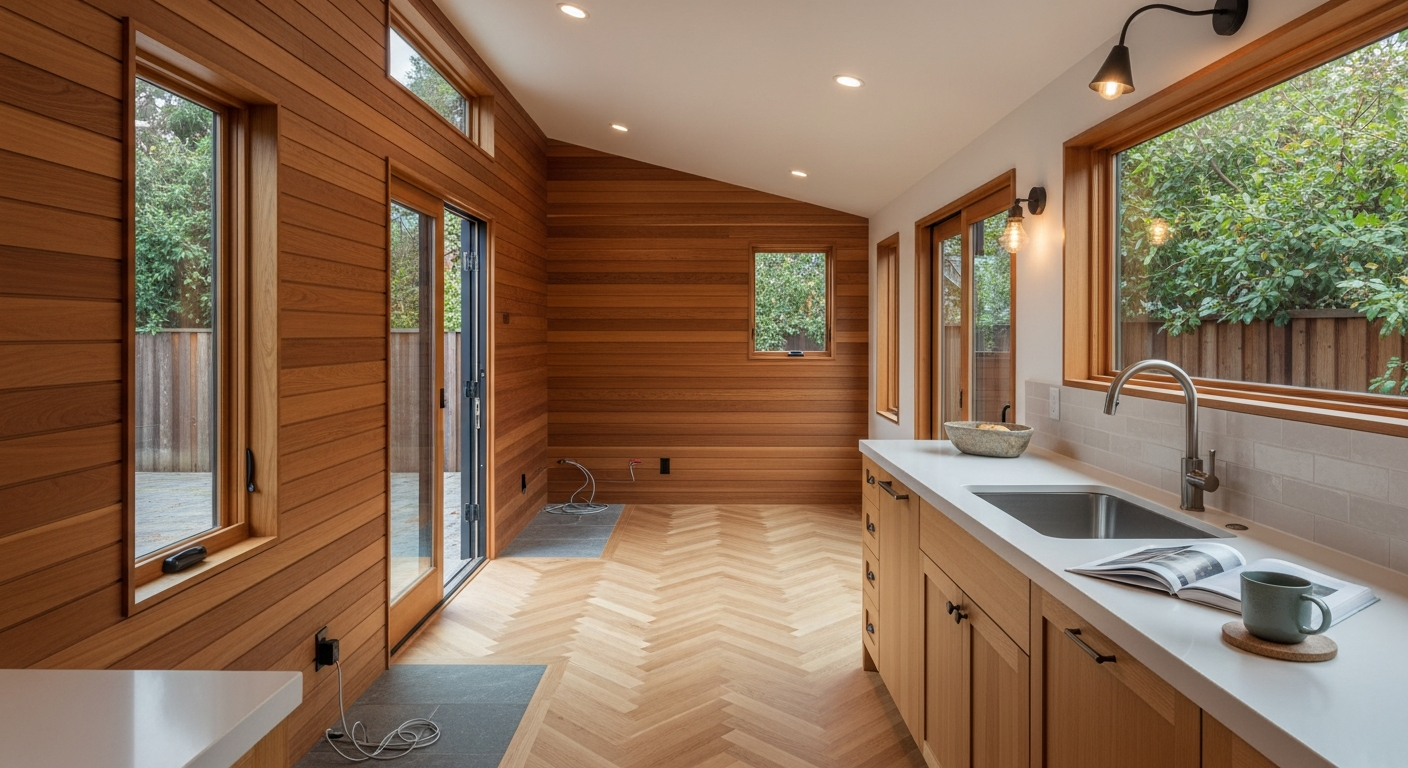
What Is an ADU for Multigenerational Living and Why Are Bay Area Families Building Them?
An ADU for multigenerational living is an accessory dwelling unit — either attached or detached — designed specifically so that aging parents, adult children, or extended family members can live independently on the same property while staying close to loved ones. In 2026, multigenerational ADUs are the fastest-growing segment of accessory dwelling construction across Los Gatos, Saratoga, Palo Alto, and the broader Silicon Valley.
Based on our 116+ completed Bay Area projects at Barcci Builders (CA License #1086047), roughly 60% of the ADU inquiries we receive in 2026 are driven by multigenerational needs — whether that's creating a comfortable space for elderly parents moving from overseas, providing a first home for an adult child working in tech, or simply keeping three generations under one roof without sacrificing anyone's privacy.
The reasons are both emotional and financial. The median single-family home price in Santa Clara County exceeded $1.9 million in early 2026, making independent housing practically unreachable for many younger adults. Meanwhile, Bay Area assisted living facilities average $6,500–$10,000 per month. Building a multigenerational ADU — typically costing $175,000 to $450,000 or more — provides a far more dignified and cost-effective solution that also increases your property value by an estimated 20–35%, according to our project resale data.
As someone who has designed and built ADUs across every South Bay and Peninsula neighborhood, the single biggest advantage I see families gain isn't financial — it's peace of mind. Knowing your 80-year-old mother is 40 feet away rather than 40 minutes away is transformative.
How Much Does a Multigenerational ADU Cost in the Bay Area in 2026?
| ADU Type | Typical Size | 2026 Bay Area Cost Range | Cost per Sq Ft | Timeline |
|---|---|---|---|---|
| Garage Conversion ADU | 350–500 sq ft | $175,000–$250,000 | $400–$550 | 4–6 months |
| Attached ADU (Addition) | 500–800 sq ft | $250,000–$375,000 | $450–$550 | 5–8 months |
| Detached ADU (New Build) | 600–1,200 sq ft | $300,000–$450,000+ | $450–$600 | 7–12 months |
| Junior ADU (JADU) | 150–500 sq ft | $100,000–$175,000 | $350–$500 | 3–5 months |
These numbers include design, engineering, permits, site work, construction, and finish materials. They do not include the cost of furniture, landscaping around the unit, or major utility upgrades (such as new sewer laterals — which can add $8,000–$25,000 in older Los Gatos and Saratoga neighborhoods where clay pipes are common).
What drives the cost higher for multigenerational ADUs specifically? Accessibility upgrades. Curbless showers with linear drains, wider 36-inch doorways, zero-step entries, grab-bar-ready blocking, and ADA-compliant bathroom layouts typically add $12,000–$30,000 to a standard ADU build, but they're essential investments for aging-in-place design.
Our 2026 project data shows that the sweet spot for most multigenerational families in Silicon Valley is a detached one-bedroom, one-bathroom ADU between 600 and 800 square feet, which balances full independence with a manageable budget of roughly $300,000–$380,000 all-in.
Best ADU Floor Plan Layouts for Multigenerational Families
The best floor plan for a multigenerational ADU prioritizes three things: accessibility, privacy, and a layout that feels like a real home — not a hotel room. After designing ADU floor plans for over 50 multigenerational families across the Bay Area, our team at Barcci Builders has learned what works and what doesn't.
One-Bedroom ADU (600–800 sq ft) — Most Popular
Studio ADU (400–550 sq ft) — Budget-Friendly Option
Ideal when the family member will spend significant time in the main house but needs a private retreat for sleeping, bathing, and quiet time. We've built beautiful studio ADUs in Campbell and San Jose that use pocket doors, built-in Murphy beds, and kitchenettes with 24-inch appliances to maximize every inch.
Two-Bedroom ADU (900–1,200 sq ft) — Maximum Flexibility
When we're designing for elderly parents who may eventually need a live-in caregiver, we recommend a two-bedroom layout. The second bedroom also serves as a guest room, home office, or physical therapy space in the interim. California's AB 68 and SB 9 legislation allows ADUs up to 1,200 square feet on most residential lots in Santa Clara County, making this layout legally feasible in most neighborhoods.
Critical Design Features for Every Layout
- Zero-step entry — No threshold higher than ½ inch at any exterior door
- 36-inch minimum door widths throughout (standard is 30–32 inches)
- Curbless shower with a bench seat and handheld showerhead — we use Kohler Anthem or Moen S6320 systems
- Lever-style door handles (not knobs) — easier for arthritic hands
- Blocking in bathroom walls for future grab bar installation
- Open floor plan with minimal hallway space — critical for walker or wheelchair navigation
- Natural light from multiple directions — Marvin Essential or Milgard Trinsic windows with low sills to bring light in at eye level while seated
- Slip-resistant flooring — we recommend luxury vinyl plank (LVP) in wood-look finishes or microcement for a seamless, trip-hazard-free surface
Our 3D design rendering service lets families walk through the ADU virtually before construction starts — which is especially valuable when the future occupant lives out of state and can't visit the job site.
ADU Permits and Regulations for Bay Area Homeowners in 2026
Every ADU in the Bay Area requires a building permit, and the good news is that California's pro-ADU legislation (AB 68, AB 881, SB 9, AB 1033) has streamlined the process significantly since 2020. Permit approval in Santa Clara County currently takes 4–8 weeks for a standard ADU application, while San Mateo County typically processes ADU permits in 6–10 weeks, according to our 2026 project timelines.
Here's what Bay Area homeowners need to know about ADU regulations in 2026:
- Size limits: Detached ADUs up to 1,200 sq ft are allowed on single-family lots. Attached ADUs can be up to 50% of the existing home's square footage (or 1,200 sq ft, whichever is less). Junior ADUs (JADUs) up to 500 sq ft are built within the existing home footprint.
- Setbacks: 4-foot rear and side setbacks for detached ADUs (California state minimum). Some cities like Los Gatos and Saratoga previously required more, but state law now preempts local setback rules for ADUs.
- Parking: No additional parking is required for an ADU in 2026 — this is a statewide rule that removed one of the biggest barriers to ADU construction.
- Owner occupancy: As of 2025, California does not require owner-occupancy for ADUs permitted under state law (though some jurisdictions still require it for JADUs).
- Impact fees: ADUs under 750 sq ft are exempt from impact fees. For units over 750 sq ft, fees are proportional — typically $5,000–$15,000 in Santa Clara County cities.
- AB 1033 (condo conversion): This 2024 law allows cities to permit ADU condo conversions — meaning you could eventually sell your ADU as a separate unit. As of early 2026, few Bay Area cities have opted in, but this is worth monitoring.
The permit process typically requires architectural plans, structural engineering (especially for seismic compliance), Title 24 energy calculations, and sometimes a soil report. At Barcci Builders, our ADU and home additions team handles the entire permit process, from design through final inspection sign-off. Based on our experience, the most common cause of permit delays isn't the city — it's incomplete or inaccurate plan sets. We invest heavily in getting the drawings right the first time so our clients aren't waiting months for resubmittals.
Multigenerational ADU Design Trends in Silicon Valley for 2026
The days of building a sterile white box in the backyard and calling it a "granny flat" are over. In 2026, multigenerational ADUs in the Bay Area are designed as architecturally intentional extensions of the main home — with the same material quality, finishes, and design attention you'd expect in a custom home. Here are the trends we're seeing across our current projects in Los Gatos, Saratoga, and the broader Peninsula:
Exterior Trends
- Cedar cladding with standing-seam metal accents — Warm, natural exteriors that complement mid-century and contemporary Bay Area architecture. Western Red Cedar (typically from suppliers like Real Cedar or Nakamoto Forestry) ages beautifully and feels residential rather than prefab.
- Natural stone veneer base — A 3-foot stone base wainscot using Eldorado Stone or local quarried sandstone gives visual weight and connects the ADU to the main home's landscape.
- Covered entry porches — Even a 4×6-foot covered porch with a cedar-beam overhang transforms the arrival experience. For elderly parents, it also provides weather protection while unlocking the door.
- Board-and-batten fiber cement — James Hardie Artisan panels in warm tones (Khaki Brown, Monterey Taupe) are cost-effective alternatives to real wood that hold up well in Bay Area coastal fog conditions.
Interior Trends
- Plaster range hoods and hand-applied plaster walls — Venetian plaster accent walls (often behind the bed or in the living area) add texture and warmth without wallpaper maintenance.
- Fluted details — Fluted wood panels on island fronts, vanity faces, or entry walls add dimensional interest to small spaces.
- Dekton or quartzite countertops — Dekton Kreta and Dekton Arga are popular for ADU kitchens because they're ultra-durable, heat-resistant, and virtually maintenance-free. For a more luxurious feel, Calacatta Viola marble or Taj Mahal quartzite are what our higher-budget clients choose.
- Unlacquered brass hardware — Integrated finger pulls on cabinetry for a sleek, minimal look combined with unlacquered brass on faucets and lighting that develops a living patina.
- Zellige tile backsplashes — The handmade imperfection of Moroccan zellige tile (Clé Tile and Riad Tile are go-to sources) in soft creams and sage greens adds character without overwhelming a small kitchen.
- Induction cooktops — Bay Area Air Quality Management District rules and California's 2022 building code updates make all-electric ADUs the path of least resistance. Bosch, Miele, and Fisher & Paykel induction cooktops are what we specify most often.
- Warm earthy tones — Goodbye, all-white everything. Our 2026 ADU palettes lean toward warm whites (Benjamin Moore White Dove, Sherwin-Williams Alabaster), warm greiges, terracotta accents, and sage greens.
The overarching theme is organic warmth — materials that feel natural, textures you want to touch, and spaces that are calming rather than clinical. For an elderly parent moving into a new living situation, this warmth is psychologically important. It should feel like home from day one.
ADU vs. Home Addition vs. Assisted Living: Which Is Right for Your Family?
Bay Area families weighing multigenerational living options typically compare three paths: building an ADU, adding onto the main house, or placing a family member in assisted living. For most Silicon Valley families in 2026, a detached ADU offers the best combination of independence, cost efficiency, and long-term property value — but each option has clear trade-offs.
| Factor | Detached ADU | Home Addition | Assisted Living Facility |
|---|---|---|---|
| Upfront Cost | $300K–$450K | $200K–$500K+ | $0 upfront |
| Monthly Ongoing Cost | $200–$400 (utilities) | $100–$200 (utilities) | $6,500–$10,000/month |
| 5-Year Total Cost | $312K–$474K | $206K–$512K | $390K–$600K |
| Privacy Level | High — separate building | Moderate — shared walls | High — separate facility |
| Family Proximity | High — same property | Highest — same building | Low — offsite |
| Property Value Impact | +20–35% estimated | +15–25% estimated | None |
| Permit Complexity | Moderate (4–8 weeks) | Moderate to High | N/A |
| Resale/Rental Flexibility | Can rent if family moves | Limited | N/A |
| Construction Timeline | 7–12 months | 5–10 months | Immediate |
The math becomes especially compelling over time. At $8,000/month for a Bay Area memory care or assisted living facility, a family spends $480,000 over five years with zero equity to show for it. A $350,000 detached ADU, by contrast, is a permanent asset that adds value to your property and can be rented for $2,500–$4,000/month in most Silicon Valley neighborhoods if your family's needs change.
That said, an ADU is not a substitute for professional medical care. If your family member needs 24/7 skilled nursing, an ADU with visiting home health aides can work — but it requires thoughtful planning. We often design multigenerational ADUs with a second bedroom specifically to accommodate a future live-in caregiver. Our whole-house remodel clients sometimes combine main-house updates with a new ADU so the entire property works cohesively for the extended family.
How Long Does It Take to Build a Multigenerational ADU in the Bay Area?
- Design and engineering: 4–8 weeks — including architectural plans, structural engineering, Title 24 energy compliance, and 3D renderings for client approval
- Permit review and approval: 4–8 weeks in Santa Clara County (cities like Los Gatos, Saratoga, Cupertino) and 6–10 weeks in San Mateo County (Menlo Park, Burlingame, Redwood City)
- Site preparation and foundation: 2–4 weeks — including grading, trenching for utilities, and pouring the concrete slab or crawl-space foundation
- Framing and rough systems: 3–5 weeks — framing, roofing, rough plumbing, electrical, and HVAC
- Inspections and corrections: 1–2 weeks — municipal inspections for rough framing, electrical, plumbing, and insulation
- Interior finishes: 4–6 weeks — drywall, flooring, cabinetry, countertops, tile, painting, and fixture installation
- Final inspections and punch list: 1–2 weeks — certificate of occupancy, utility connections, and final walkthrough
The biggest variable isn't construction — it's design decisions and material lead times. Custom European cabinetry (such as from Leicht or Poggenpohl) can take 12–16 weeks to arrive. We advise multigenerational ADU clients to finalize all finishes during the design phase and place material orders before the permit is even approved — this can shave 4–6 weeks off the total project timeline.
Weather is rarely a significant factor in the Bay Area, though El Niño rain years can add 1–2 weeks to foundation and framing phases. Our team builds year-round and uses temporary weather protection to keep projects on schedule through winter months.
Frequently Asked Questions
How much does it cost to build an ADU for parents in the Bay Area?
Building an ADU for parents in the Bay Area costs between $175,000 and $450,000+ in 2026, depending on the type and size. A garage conversion ADU (350–500 sq ft) runs $175,000–$250,000, while a fully detached one-bedroom ADU (600–800 sq ft) typically costs $300,000–$380,000. Adding aging-in-place features like curbless showers, wider doorways, and zero-step entries adds approximately $12,000–$30,000. Based on our 116+ completed Bay Area projects, the average multigenerational ADU we build comes in around $340,000 for a 700 sq ft detached unit with full accessibility features.
What is the best ADU floor plan for aging parents?
The best ADU floor plan for aging parents is a one-bedroom layout between 600 and 800 square feet with an open living/kitchen area, a full bathroom with curbless shower, and a zero-step entry. Based on our Bay Area project experience, we recommend 36-inch minimum door widths throughout, lever-style handles, slip-resistant LVP or microcement flooring, and blocking in bathroom walls for future grab bars. A covered entry porch and natural light from multiple directions are also critical for comfort and safety. If there's any possibility of a future live-in caregiver, consider a two-bedroom layout (900–1,200 sq ft) from the start — adding a second bedroom later is far more expensive than including it in the original design.
Do I need a permit to build an ADU in Los Gatos or Saratoga?
Yes, you need a building permit for any ADU in Los Gatos, Saratoga, or any Bay Area city. The permit process in Santa Clara County currently takes 4–8 weeks for standard ADU applications in 2026. You'll need architectural plans, structural engineering, Title 24 energy calculations, and sometimes a soil report. California state law (AB 68, AB 881) has streamlined ADU permitting, overriding many local restrictions on setbacks and parking. ADUs under 750 sq ft are exempt from impact fees, while larger units typically incur $5,000–$15,000 in fees depending on the jurisdiction.
Is it cheaper to build an ADU or pay for assisted living in California?
Over a five-year period, building an ADU is significantly cheaper than assisted living in California. Bay Area assisted living facilities cost $6,500–$10,000 per month, totaling $390,000–$600,000 over five years with no equity gained. A detached multigenerational ADU costs $300,000–$450,000 upfront but adds an estimated 20–35% to your property value and can later be rented for $2,500–$4,000/month in Silicon Valley. The ADU also provides much higher quality of life for most seniors — privacy, family proximity, and familiar surroundings. However, an ADU is not a substitute for skilled nursing care if 24/7 medical attention is required.
How big can I build an ADU in Santa Clara County in 2026?
In Santa Clara County in 2026, you can build a detached ADU up to 1,200 square feet on a single-family residential lot, regardless of lot size — this is guaranteed by California state law. Attached ADUs can be up to 50% of the existing home's living area or 1,200 sq ft, whichever is less. Junior ADUs (JADUs) built within the existing home footprint are limited to 500 sq ft. You can legally have both an ADU and a JADU on the same property. Setbacks are 4 feet from rear and side property lines for detached ADUs, and no additional parking is required.
What are the best materials for a multigenerational ADU in 2026?
The most popular materials for multigenerational ADUs in the Bay Area in 2026 include rift-cut white oak for cabinetry and flooring, Dekton (Kreta or Arga) or quartzite for countertops, zellige tile for backsplashes, and cedar or James Hardie fiber cement for exteriors. For flooring, we recommend luxury vinyl plank (LVP) or microcement for accessibility — both are slip-resistant and create a seamless surface without trip hazards. Induction cooktops from Bosch, Miele, or Fisher & Paykel are standard in all-electric Bay Area ADUs. Design palettes in 2026 trend toward warm earthy tones, unlacquered brass hardware, and hand-applied plaster walls rather than the sterile all-white aesthetic of previous years.
Can I rent out my multigenerational ADU if my parents move out?
Yes, in most Bay Area cities you can rent out your ADU if your family's needs change. California state law prohibits cities from requiring owner-occupancy for ADUs permitted after January 1, 2020. ADUs in Silicon Valley rent for $2,500–$4,000/month depending on size and location. Additionally, AB 1033 (effective 2024) allows cities to permit ADU condo conversions, meaning you may eventually be able to sell the ADU as a separate unit — though few Bay Area cities have opted into this provision as of early 2026. Short-term rentals (Airbnb/VRBO) are restricted or banned in many Bay Area cities, so check your local ordinance before planning short-term rental income.
What is the difference between an ADU and a JADU in California?
An ADU (Accessory Dwelling Unit) is a fully independent living unit with its own kitchen, bathroom, and entrance — it can be attached or detached from the main home and can be up to 1,200 square feet. A JADU (Junior Accessory Dwelling Unit) is built within the existing footprint of the primary home, is limited to 500 square feet, and may share a bathroom with the main house (though it must have its own cooking facility, which can be as simple as a kitchenette). JADUs are typically less expensive ($100,000–$175,000 in the Bay Area) and require shorter construction timelines (3–5 months). California law allows you to build both an ADU and a JADU on the same single-family lot.